

III Volta al Camp de Morvedre.
HistoryJosé Luis Laguía, the smartest rider in the peloton.
Report by Jose Lorente Garcerá.
- Date17 Feb 1984Friday, start at 12:00
- Distance176 kmEstivella – Beselga
- Starters105Riders
 Play “The III Volta al Camp de Morvedre, on film”
A crazy week of cycling in the Valencian Community, with a host of races packed into two weeks. Take note:
- Wednesday 15: Gran Premio Alicante (Noël Dejonckheere, Teka)
- Friday 17: III Volta al Camp de Morvedre (José Luis Laguía, Reynolds)
- Saturday 18: Luis Puig (Noël Dejonckheere, Teka)
- Sunday 19: Gran Premio Alfafar Trofeo Pérez Llácer (guess who… Noël Dejonckheere, Teka)
- Tuesday 21: Volta a la Comunitat Valenciana (Bruno Cornillet, La Vie Claire)
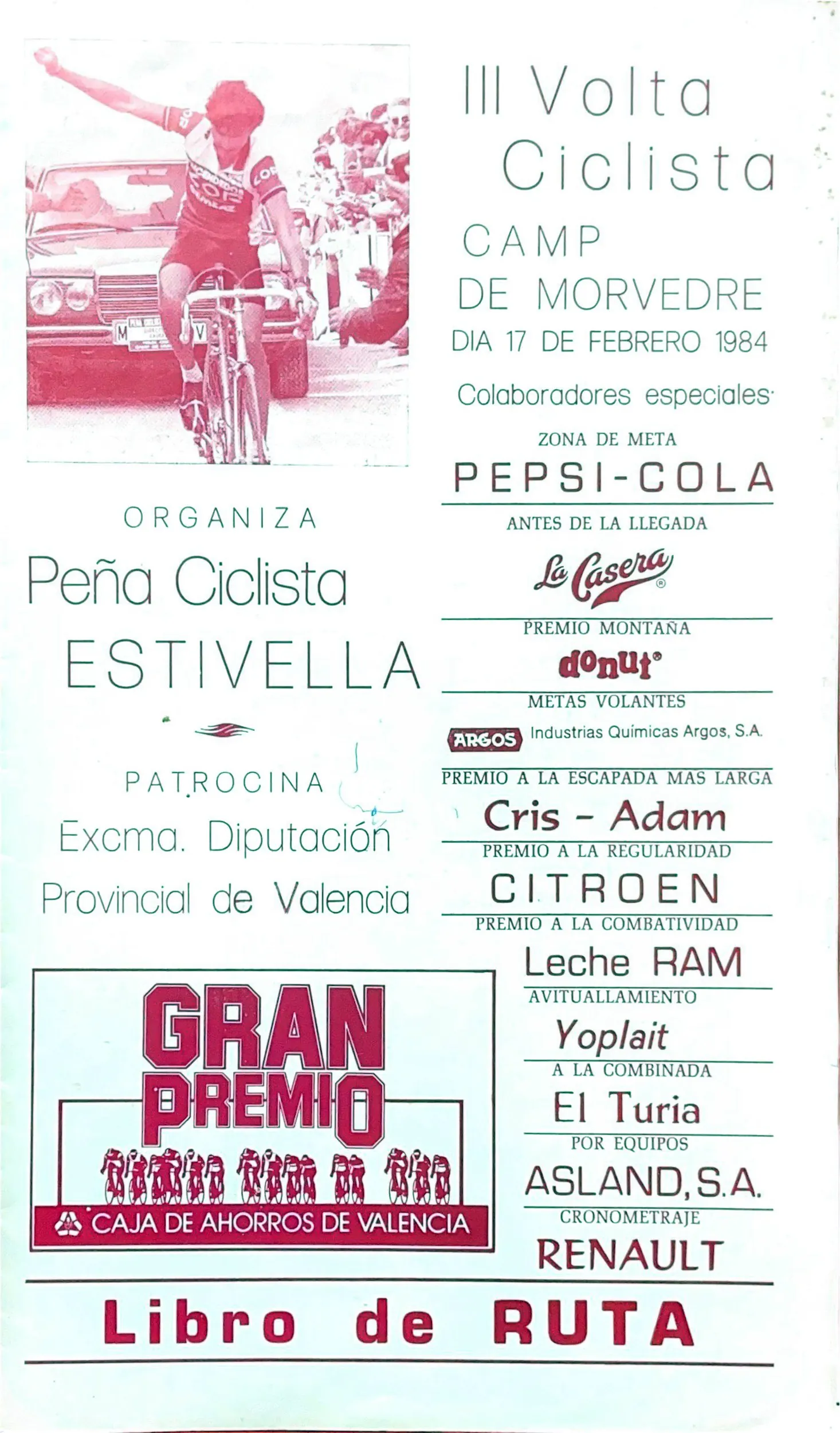
Against this background, the Valencian Community was already, in those distant 1980s, an important meeting point for Spanish and some foreign teams, who had begun to see that February is better spent here than in their home countries. So the III Volta al Camp de Morvedre had to move from Saturday to Friday, sound familiar?, to fit into that rather overcrowded jigsaw of races.
The route.
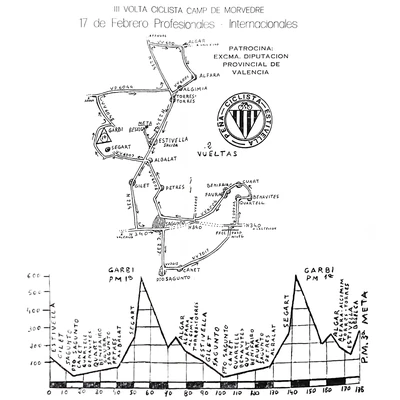
The route, as was the custom in every edition, and to paraphrase Martes y Trece, “it’s the same, but it’s not the same”, so let us explain.
The start was at Els Pins in Estivella, on the same course as the 1983 race. Two big laps heading for Gilet, Sagunto and Los Valles, with an intermediate sprint at Quartell (km 25), Petrés and Albalat dels Tarongers, where the race climbed the Alto del Garbí (km 55) and descended by the Oronet with a left turn, then up to Algar de Palancia and back to Estivella by Alfara de la Baronía, Algímia d’Alfara and Torres Torres, closing the first lap. A Special Sprint was placed at the finish line (km 87) and the second lap was exactly the same, including the intermediate sprint at Quartell (km 112) and the Alto del Garbí (km 142), and on reaching the finish area again the race turned right towards Beselga. A tricky moment came at the narrow, low tunnel built under the railway tracks, followed by the climb to the small village of Beselga, a kilometre and a half at 7%, where the finish stood, which a few metres earlier had also been counted as a mountain pass.
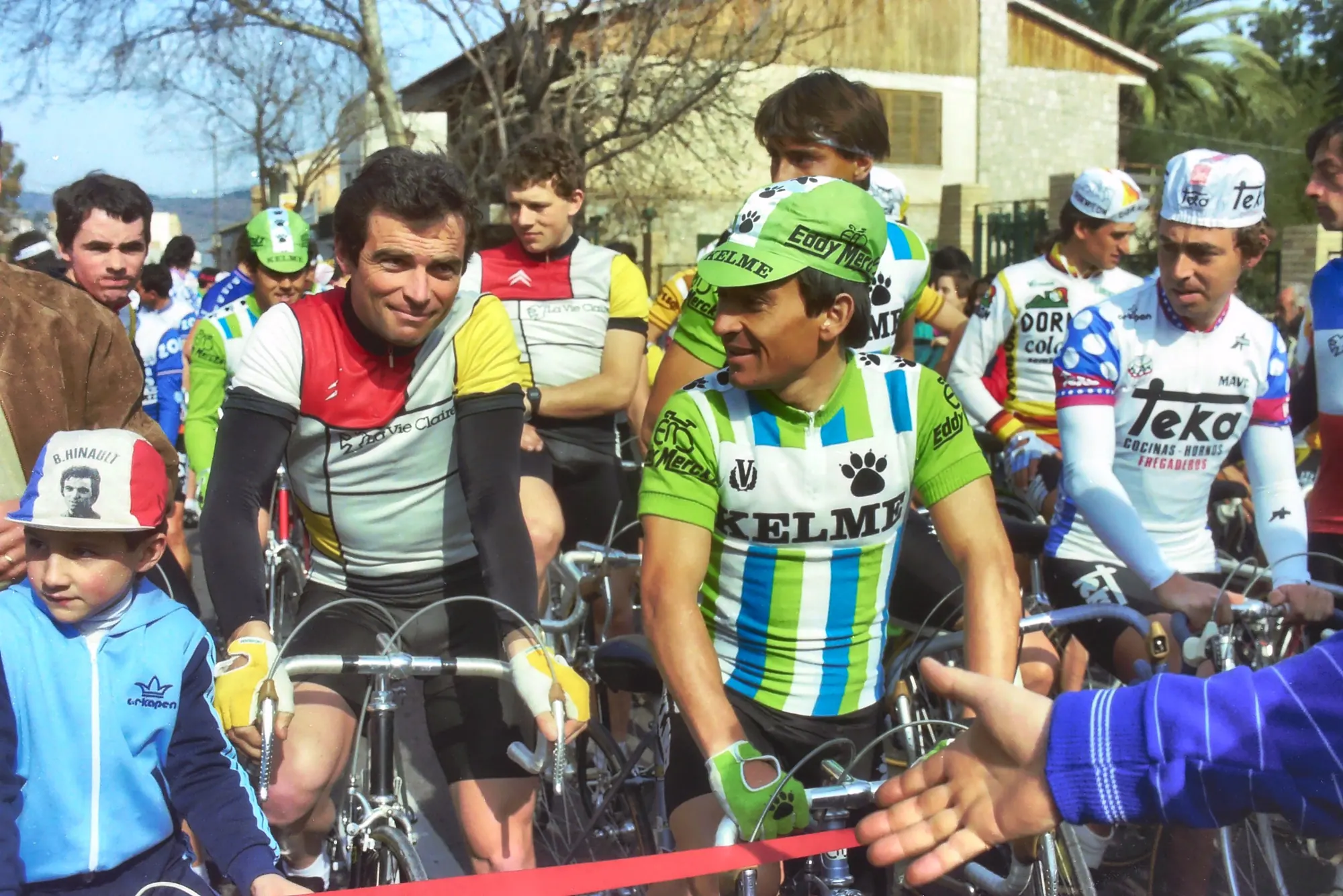
The teams.
The seven Spanish professional teams and their top stars, namely Reynolds, Zor, Kelme, Teka, Hueso, Orbea and Dormilón, plus the French La Vie Claire, and with the late withdrawal of the Belgians of Europ Decor, made up a peloton of 105 riders. All eyes were on the Frenchman Bernard Hinault, a true legend of the sport, who had come on a tour of eastern Spain to ride several races for the modest sum of 4 million pesetas.
The race.
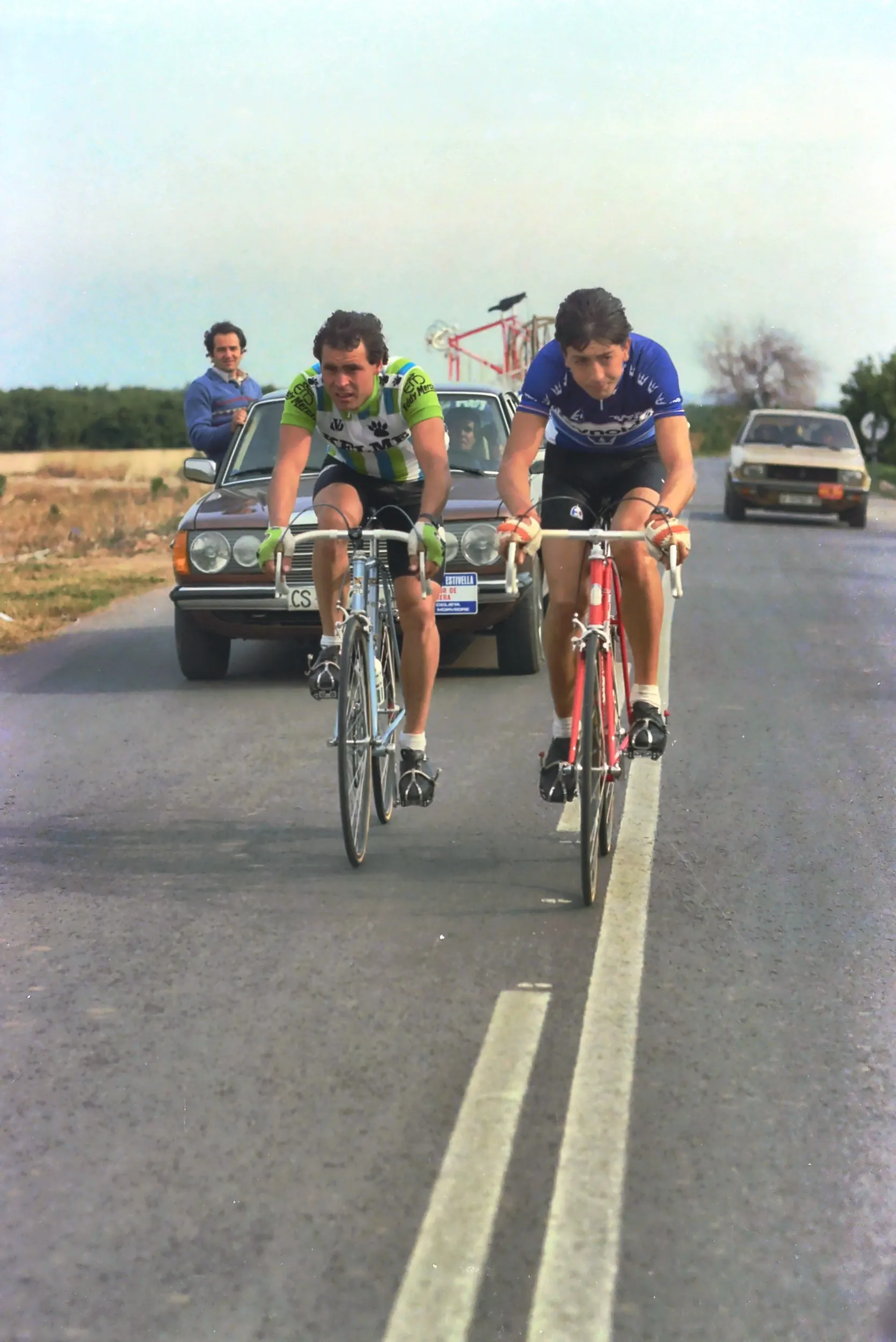
Once the race was under way, nothing of note happened until the first ascent of the Garbí. Bernard Hinault (La Vie Claire) begins to stake his claim, pulling clear on the climb with only Guillermo Arenas, Celestino Prieto (Reynolds) and Pedro Muñoz (Teka) following. They crest in that order, with Julián Gorospe a few metres behind, and on the stretch to the pure descent of the Oronet a leading group forms, from which Celestino Prieto jumps clear on the descent itself. Nobody seems to react, and while the others make up their minds about working together, Pepe Recio (Kelme) arrives from behind and fires off one of his classic cannon shots. It took Recio little effort to reach Prieto and form a solid duo that could make some headway.
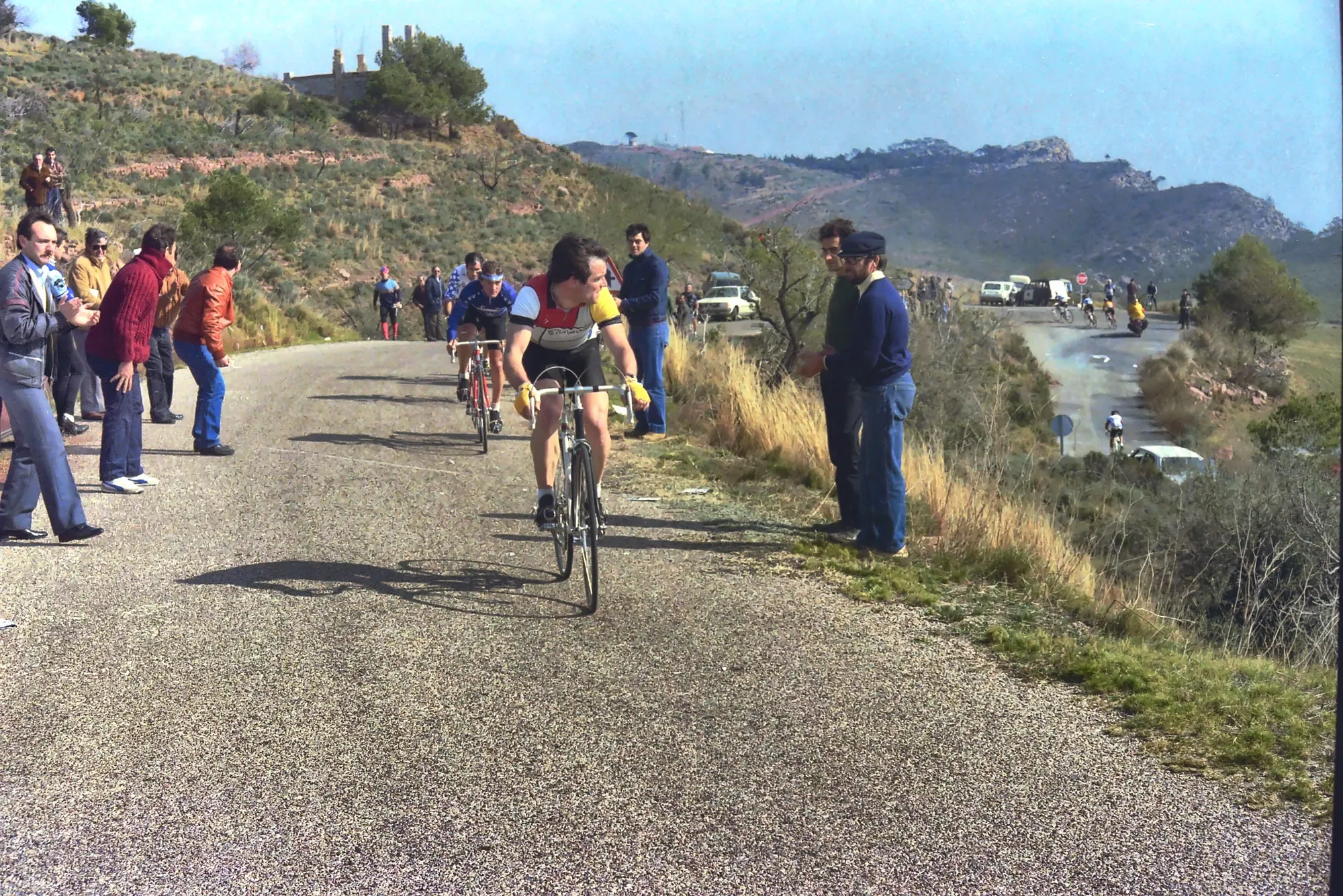
They had two main enemies. The first was the La Vie Claire battalion, with Cornillet, Rüttimann, Vallet, Leleu and Hinault himself organising the chase. The second, in the same place as in 1982, was the level crossing at Los Valles and the train that once again got in the way, cutting short the chances of Prieto and Recio and an adventure that lasted 30 km.
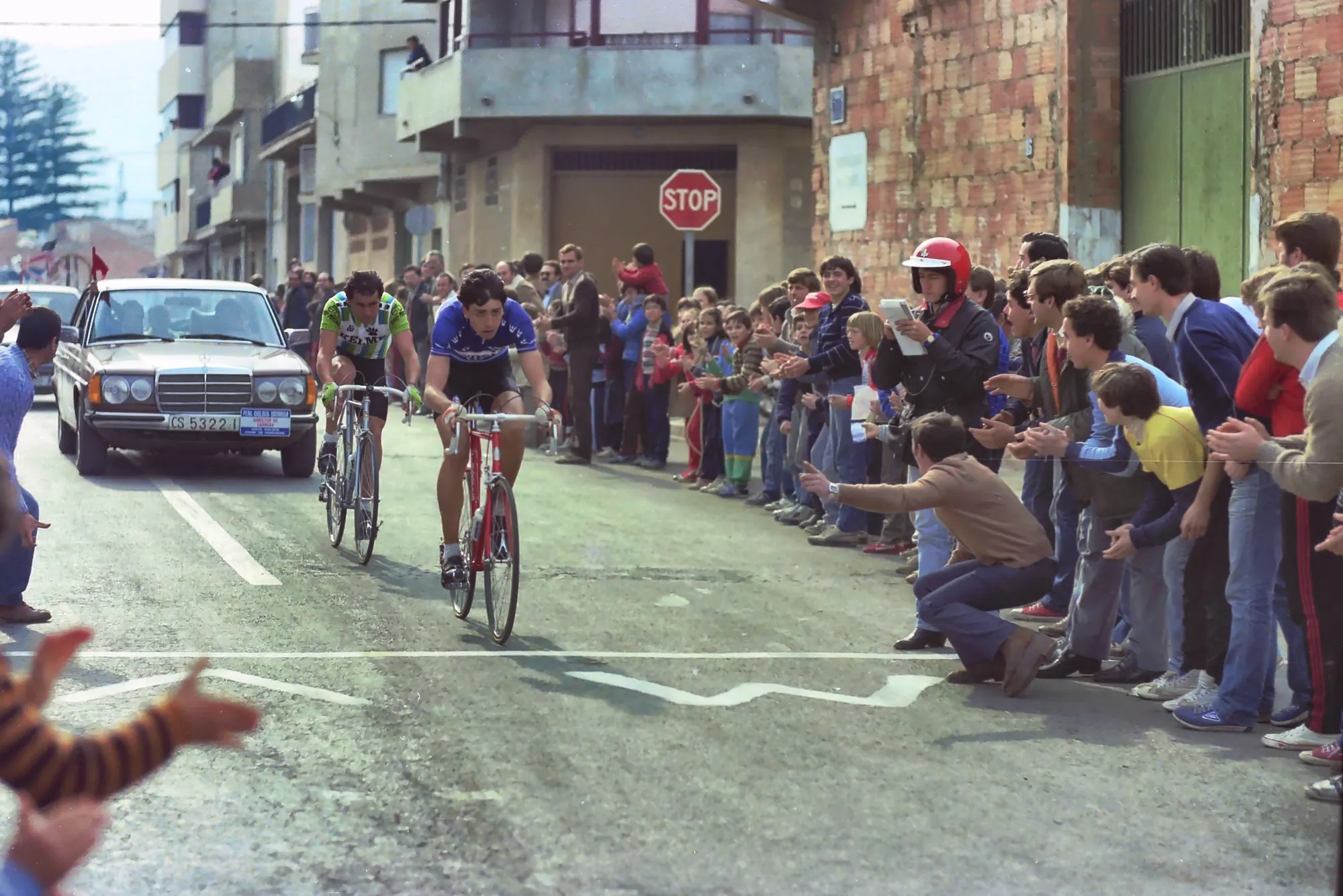
Back on the road, only 40 brave riders took on the second ascent of the Garbí; the rest decided that “once is quite enough”, and went off to the hotel. Of the brave ones, the first to try was the Kelme rider Ángel Ocaña, but in the peloton there were two riders very fond of adventures uphill, and repeat offenders on the Garbí. Pedro Muñoz (Teka) and Eduardo Chozas (Zor), as they had done in 1982 and 1983 respectively, launch themselves with every intention of repeating their success, above all the rider from Madrid, who had won here a year earlier with a similar attack.
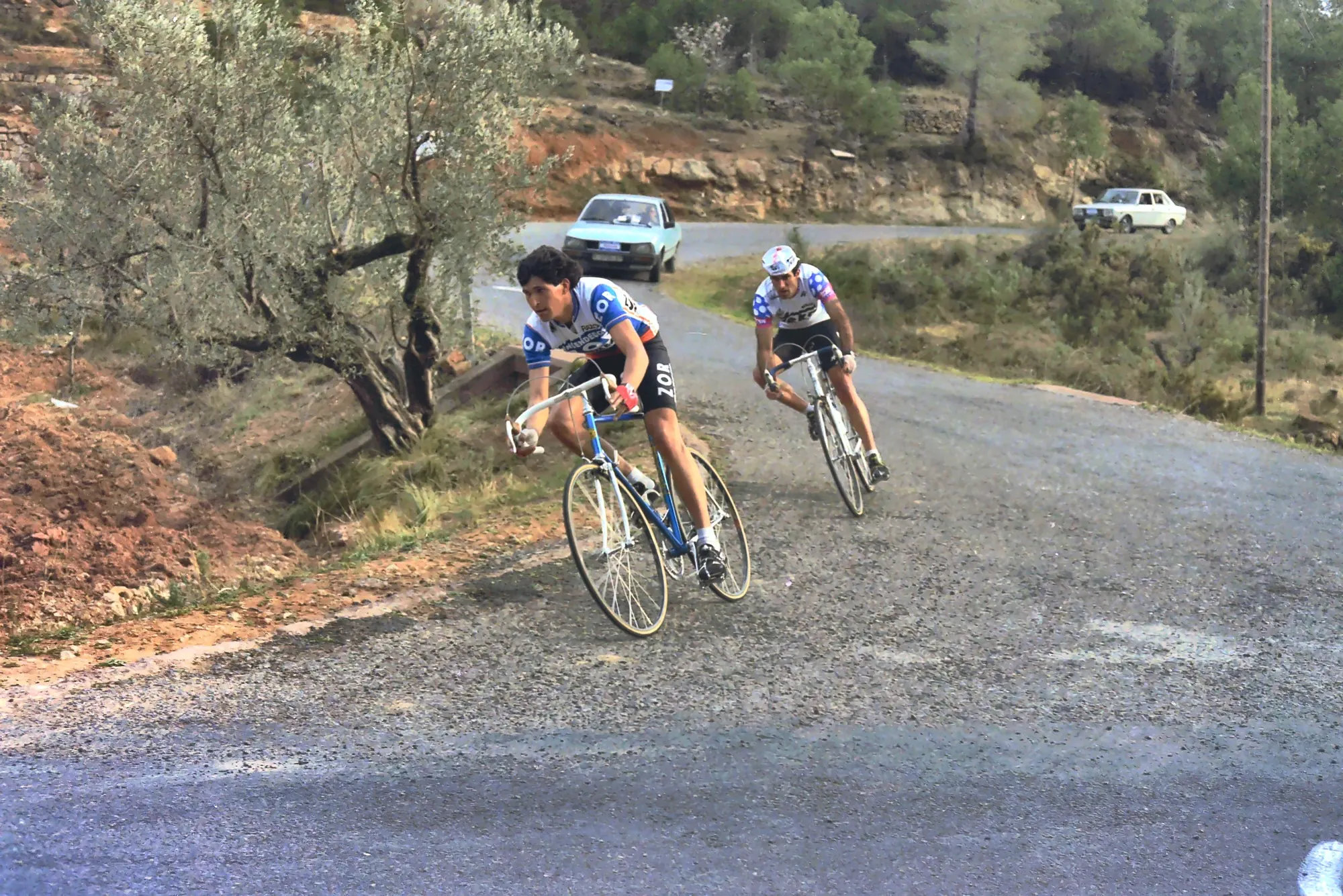
Ocaña is reeled in as we reach the ring road around the village of Segart. Just after it comes the first significant ramp of the Garbí. Bernard Hinault decides to go after the Spaniards, but as he changes gear the chain comes off and he is passed by the few riders who had got there. Furious, and after fixing the problem himself, he sets off with that famous “out of my way” look of his, overhauling the whole peloton and chasing Muñoz and Chozas. The pair do not get on: Eduardo pulls hard and Pedro will not take a turn, but even so they crest 20 seconds ahead of the Badger and a brilliant José Luis Navarro (Zor), followed by a trail of riders.
As on the first ascent, around twenty riders regroup and La Vie Claire throws itself down the Oronet in a chase remembered by all the protagonists and spectators. Only 17 left for the finish and, once again, two big obstacles for the escapees: the rise towards Algar at the end of the Oronet descent, and the last two kilometres with the hard climb to Beselga in Estivella. The escapees never reached that second obstacle, because Bernard Hinault caught them in person even before entering Estivella, but then something happened that still baffles those who were there.
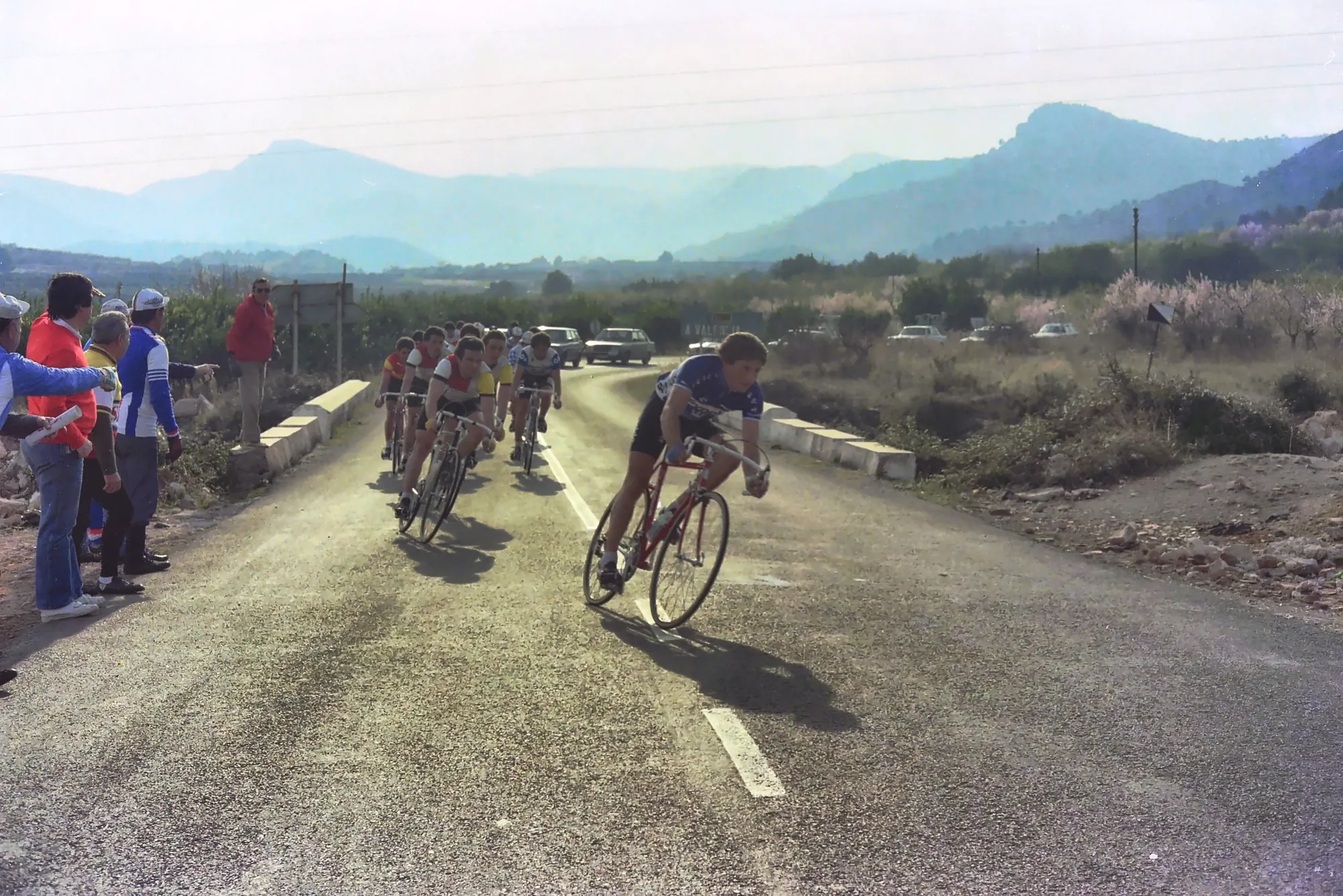
As the Beselga ramp began, and just when everything was set for the great star of the world peloton to do his thing, a Swiss rider newly turned professional, who had been with La Vie Claire for a month, attacks 2 km from the finish. Niki Rüttimann, a mere twenty-one years old, goes up the road at the worst possible moment for Hinault, who was getting his breath back to do exactly the same, wrecking the whole French strategy. Four riders go with him, one of them a real killer in finishes of this kind, a mountain sprinter who once said he sprinted uphill for the sheer fun of it, José Luis Laguía Martínez.
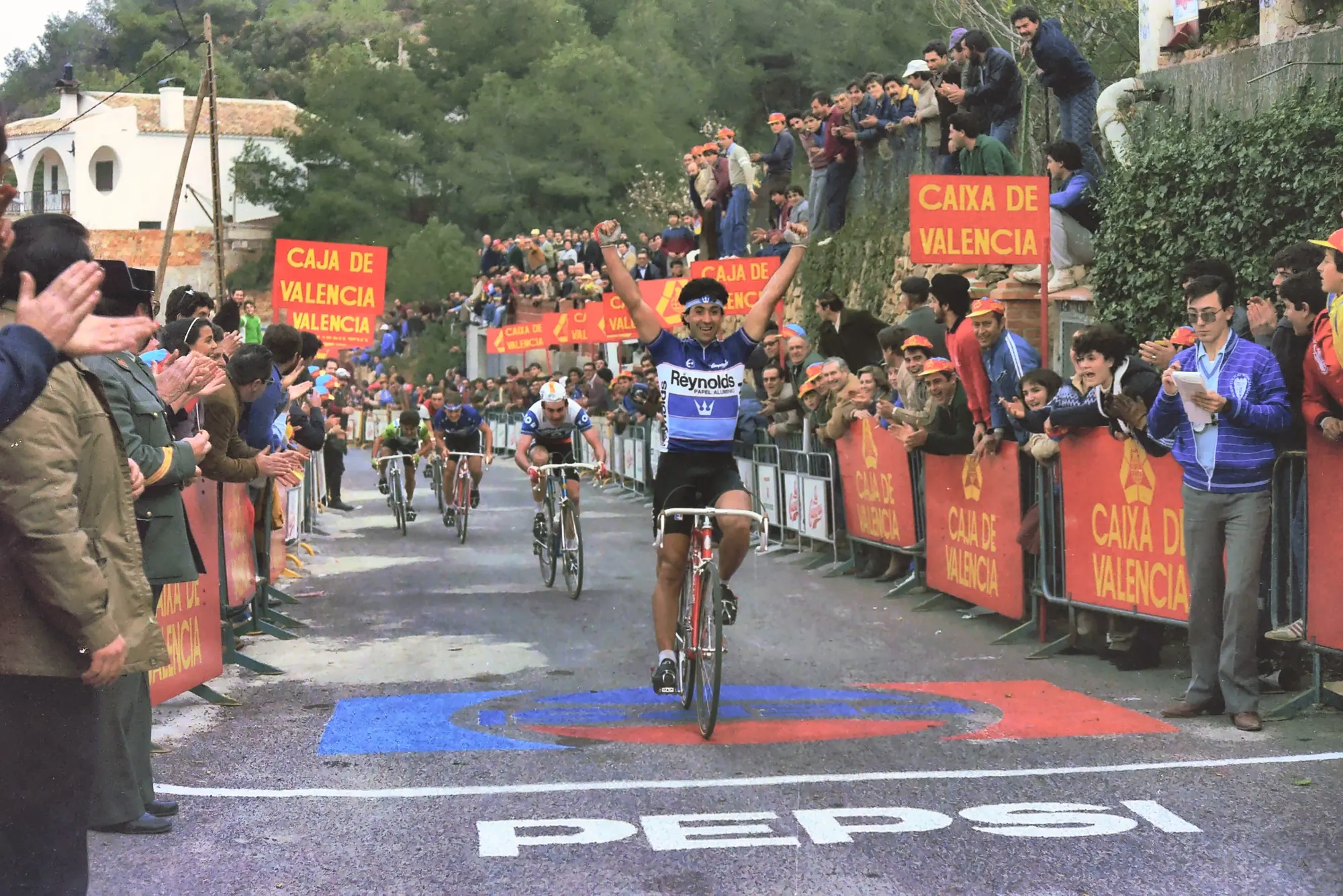
And the finish, as you would expect: Laguía first, second “nobody”, third… Well, to be strict, this is how the top ten of the III Volta al Camp de Morvedre finished.
José Luis Laguía 1st, José Luis Navarro 2nd, Guillermo Arenas 3rd, Vicente Belda 4th, Niki Rüttimann 5th, Jesús Rodríguez Magro 6th, Bruno Cornillet 7th, Carlos Hernández 8th, Jokin Mújika 9th and Jesús Ibáñez 10th… and, as a bonus track, Bernard Hinault 11th.
The podium.
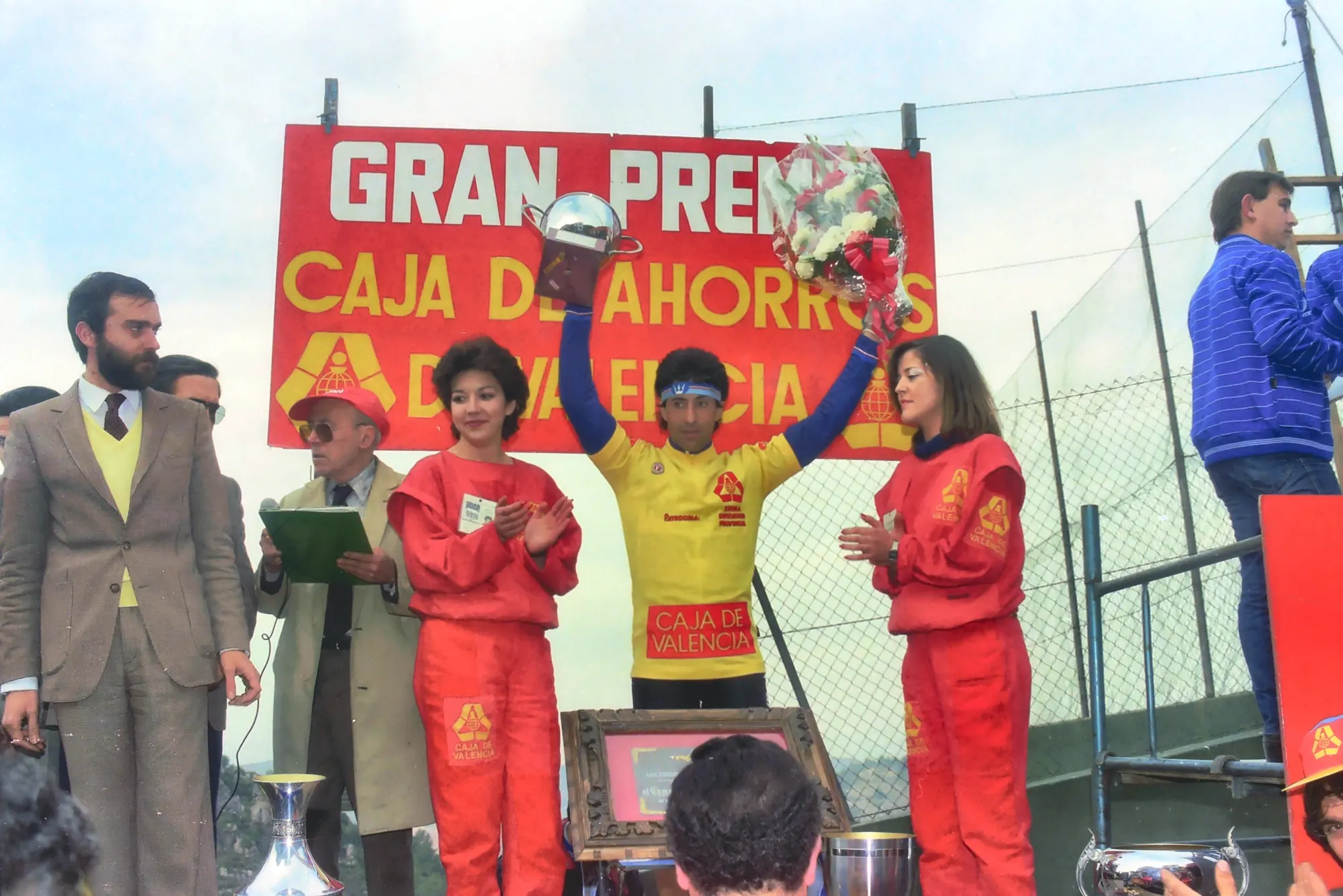
Gran Premio de la Montaña to B. Hinault, intermediate sprints to Celestino Prieto and best team the Navarrese riders of Reynolds.
Laguía returns to Estivella.
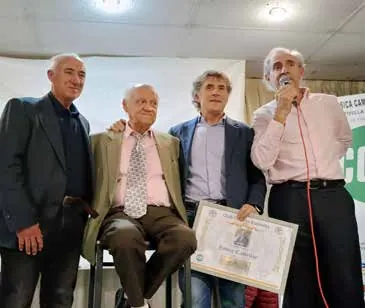
Before the usual summary of results and times, a nice detail for followers of the Clàssica Camp de Morvedre and of cycling in days gone by. José Luis Laguía was at the presentation of the 2025 Clàssica Camp de Morvedre and was able to meet several of his old friends, among them the Valencian photographer Antonio Ogalla, to whom he showed his affection and appreciation. There was also time to visit that tricky climb to Beselga, and the famous access tunnel where Rüttimann “did in” his own team leader, the legendary Bernard Hinault. José Luis Laguía, accompanied by his son and Jose Lorente, was amazed to see again how narrow that underpass was, on a walk that was well worth it. Then, together with Javier Castellar and Pedro Delgado, they served the paella to all the guests. Just another day at the Clàssica Camp de Morvedre.
Results.
- WinnerJ. L. LaguíaReynolds
- Average38.5 km/h
- Finishers40Riders classified
| # | Rider | Team | Time |
|---|---|---|---|
| 1 | José Luis LaguíaReynolds | Reynolds | 4:33:57 |
| 2 | José Luis NavarroZor-Gemeaz | Zor-Gemeaz | s.t. |
| 3 | Guillermo ArenasReynolds | Reynolds | s.t. |
| 4 | Vicente BeldaKelme | Kelme | s.t. |
| 5 | Niki RüttimannLa Vie Claire-Terraillon | La Vie Claire-Terraillon | s.t. |
| 6 | Jesús Rodríguez MagroZor-Gemeaz | Zor-Gemeaz | +8" |
| 7 | Bruno CornilletLa Vie Claire-Terraillon | La Vie Claire-Terraillon | s.t. |
| 8 | Carlos HernándezReynolds | Reynolds | s.t. |
| 9 | Jokin MújikaOrbea-Campagnolo | Orbea-Campagnolo | s.t. |
| 10 | Jesús Ignacio IbáñezZor-Gemeaz | Zor-Gemeaz | +16" |
Photo gallery.
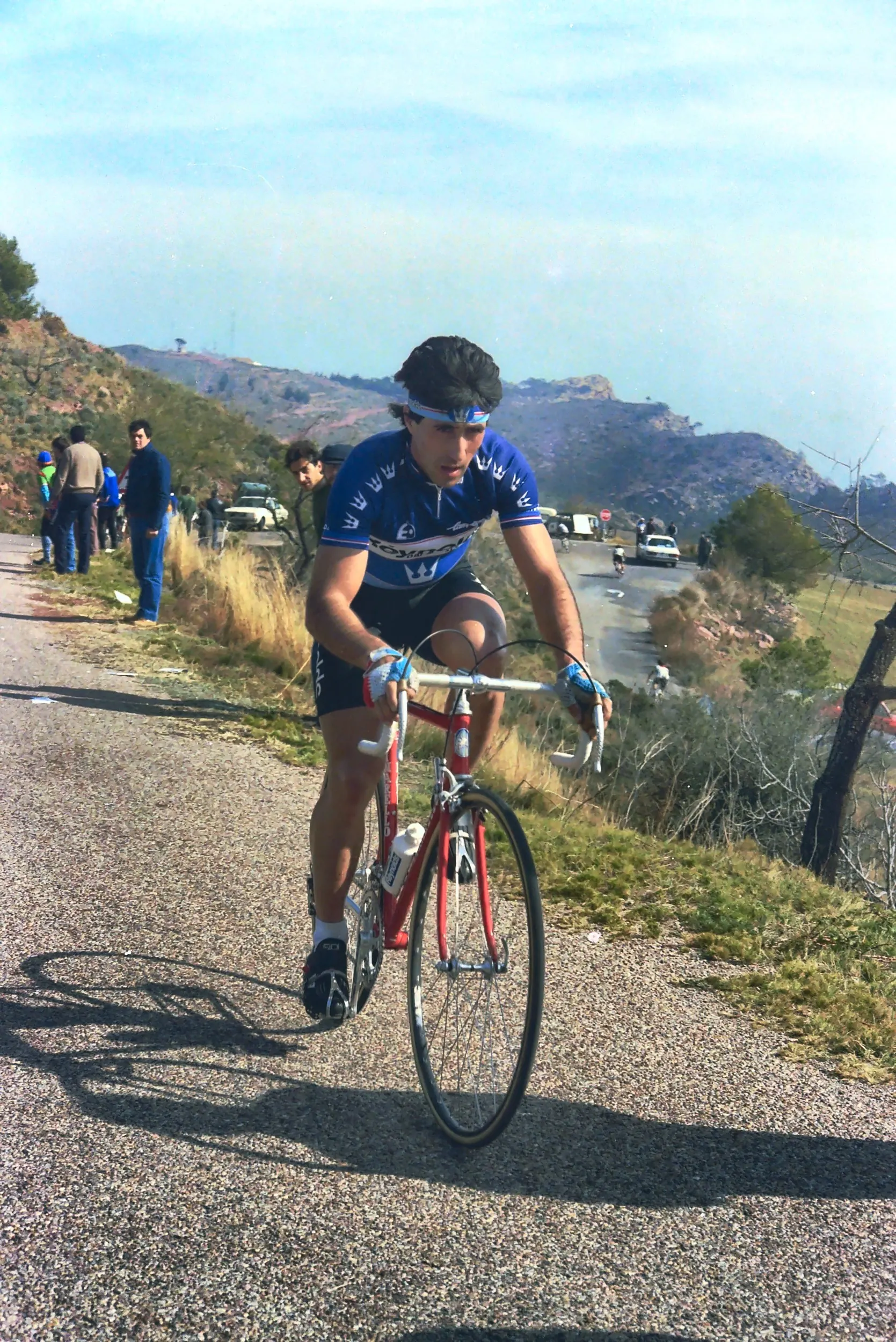
Photos: Antonio Ogalla