
IV Volta al Camp de Morvedre.
HistoryJavier Castellar and Bernard Hinault, friends for ever.
Report by Jose Lorente Garcerá.
- Date16 Feb 1985Saturday, start at 11:40
- Distance192 kmEstivella – Puerto de Sagunto
- Starters139Riders
 Play “The IV Volta al Camp de Morvedre, on film”
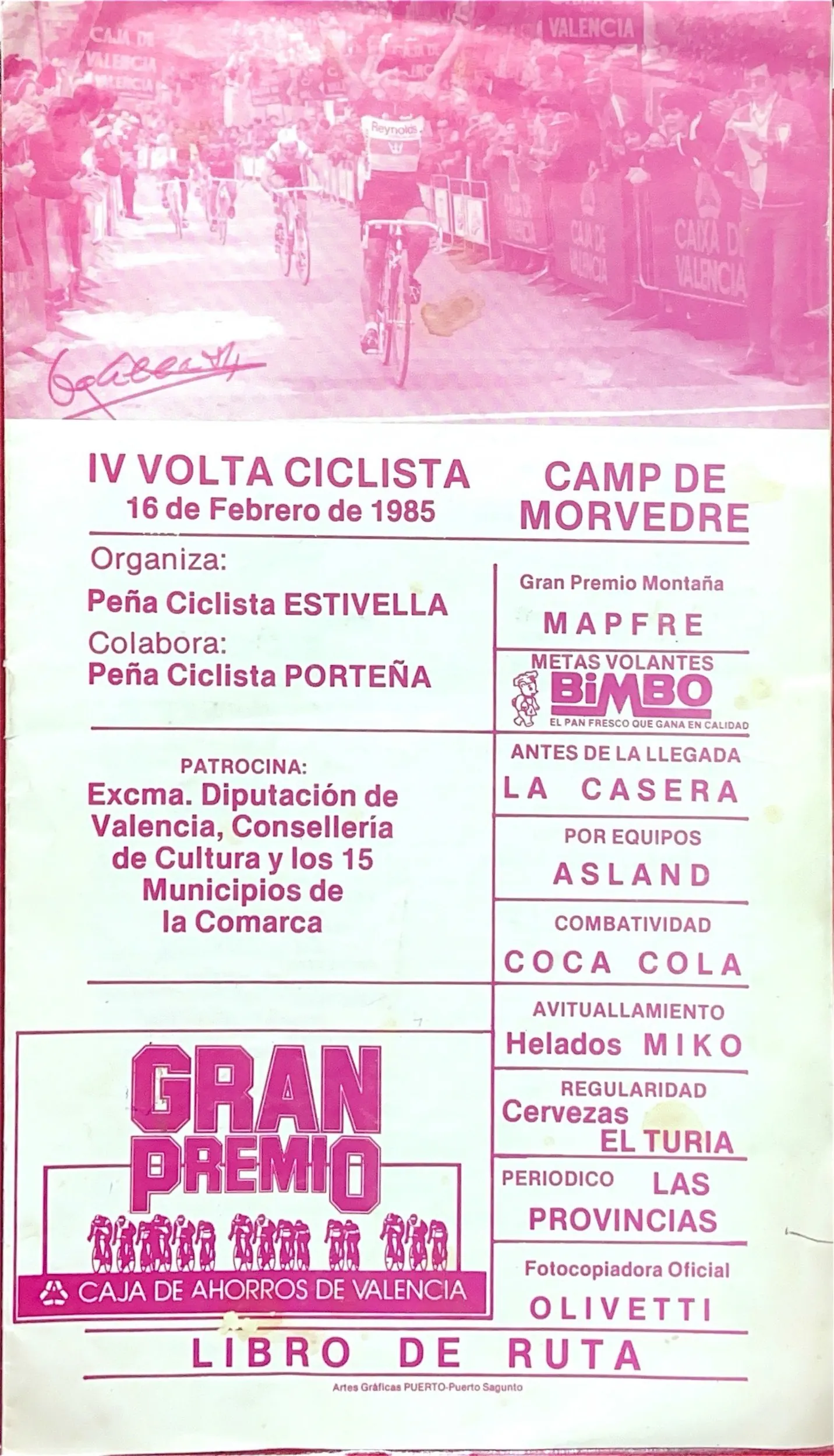
By its fourth edition, the Volta al Camp de Morvedre was already enjoying a certain notoriety. A big budget, more sponsors and 139 entries, a record in its four years of history, were the main sign that things were going well. The Garbí, or “the Valencian Tourmalet”, as it was known for a while, was a climb on everybody’s lips, well, not everybody’s, as we shall see later. The race, cleverly slotted in the day before the Trofeo Luis Puig and in turn a warm-up for the Volta a la Comunitat Valenciana, continued to enjoy great acceptance among the peloton, despite that 22% gradient that hurt the riders’ knees so much. Many of them, like you, an enthusiastic reader of old battles that we do not want to fall into oblivion, must already know the route by heart. Even so, and since we are die-hard enthusiasts of the Clàssica Camp de Morvedre, here comes the usual breakdown of the course.
The route.
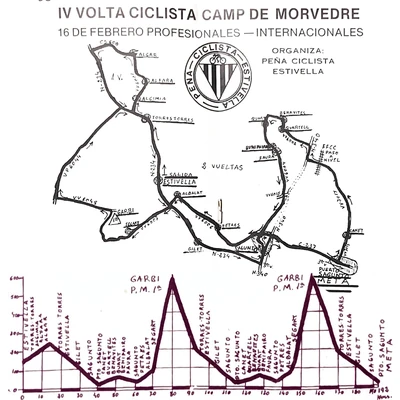
Start from the Restaurante Els Pins in Estivella and, as in recent editions, on towards Algar de Palancia, passing first through Torres Torres, Algímia d’Alfara and Alfara de la Baronía. Descent down the famous “Llonganissa” (a straight stretch of the N-234 between Estivella and Torres Torres, two kilometres long, with a certain gradient) to return to Torres Torres and the start line in Estivella, with the usual intermediate sprint (km 24). Then a descent to Sagunto, with a Special Sprint (km 34), and a visit to Los Valles to begin the first ascent of the Garbí (km 80), passing first through Petrés and Albalat dels Tarongers. Descent to Estivella with another intermediate sprint (km 100), completing the first of the two identical laps, also with a Special Sprint in Sagunto (km 110) and a second pass over the Garbí (km 156), before finally dropping straight down to Puerto de Sagunto via Estivella and its Special Sprint (km 176). Note that the finish was 36 km from the last pass over the Garbí.
The teams.
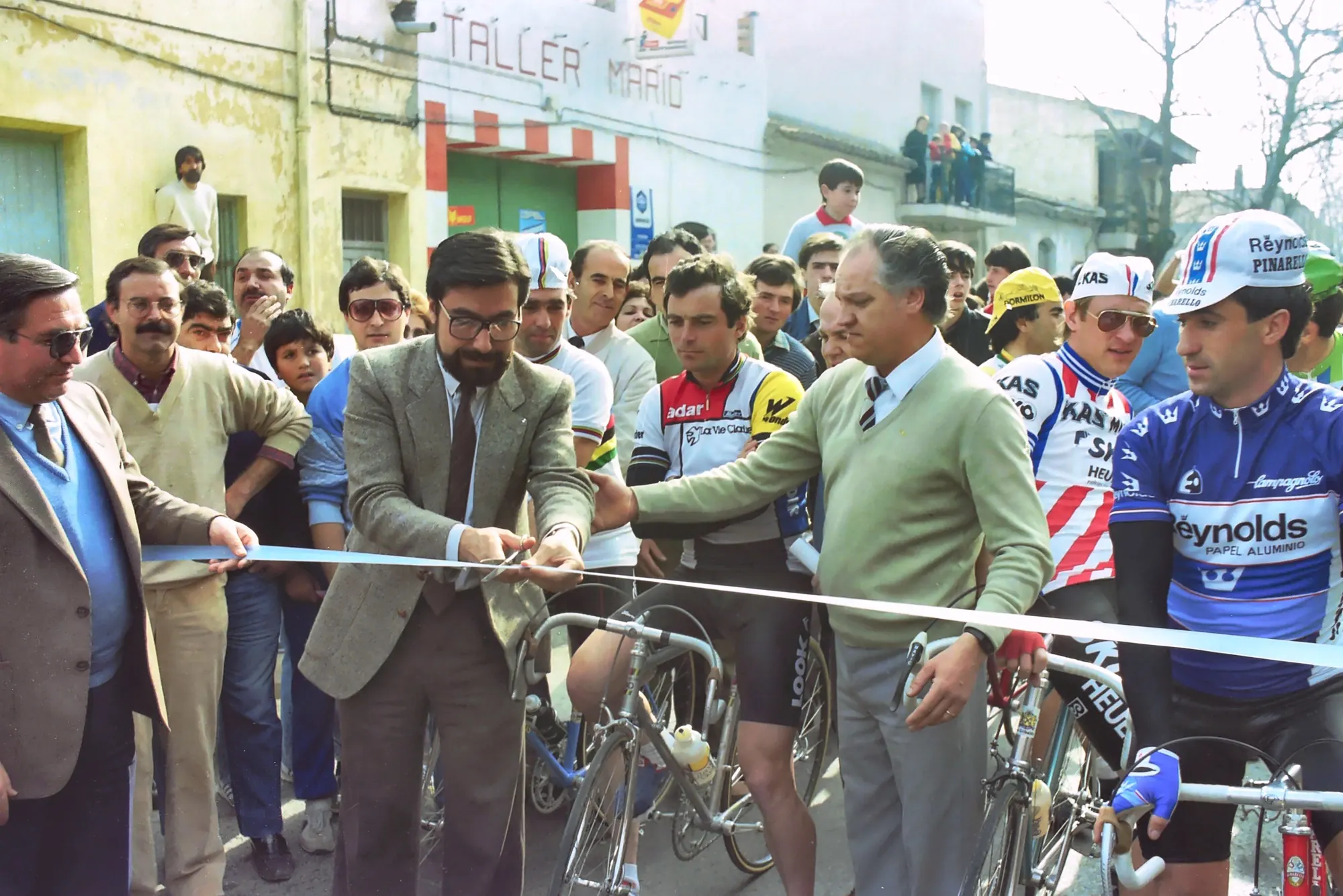
On to the entries and those 139 riders. Reynolds, Teka, Kelme, Zor, Hueso, Dormilón and Perico Delgado’s Orbea MG made up the home squad. On the other side, the foreign legion, with the Badger’s La Vie Claire, Fagor, Kas and Hitachi Splendor, plus the absence of the Belgian Safir, who did not arrive in time. The Induráins, Chozas, Perico, Peio, Blanco Villar, Rupérez, Castellar or Belda vs. the Hinaults, Kellys, Criquielions, Knetemanns, Rüttimanns, Cornillets or a young Jean-François Bernard. All of them ready and willing to take the Garbí home, with more or less hope of success. With the scene and the protagonists set, on to the story of the IV Volta al Camp de Morvedre.
The race.
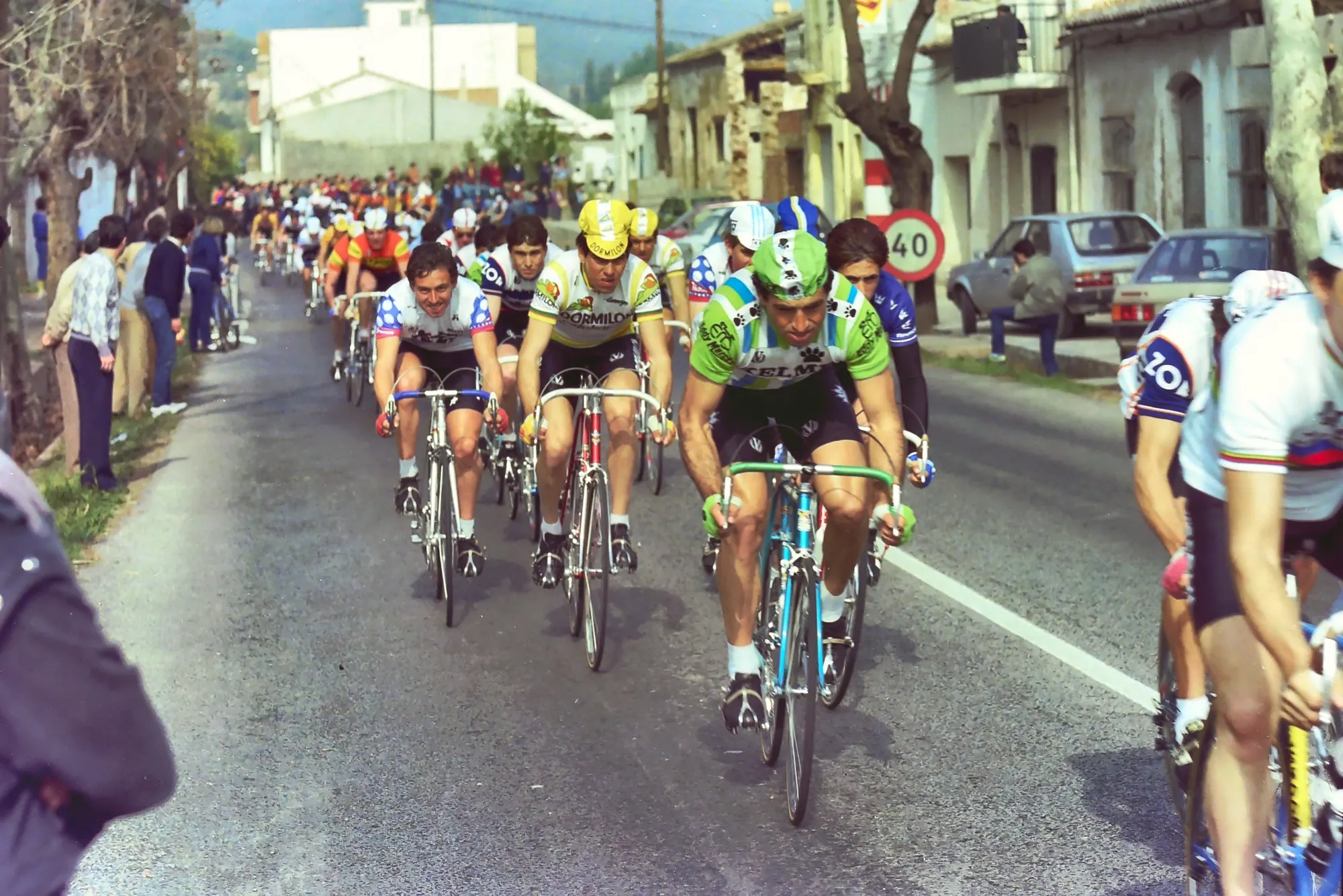
The race was held the day before that Luis Puig, surprisingly won by Enrique Aja, a few months before his move to Teka, where he spent most of his sporting career. At the start, Javier Castellar (Kelme) voiced his doubts because of a cold in the previous days that had stopped him training all week, as well as his methods of breathing oxygen the day before to ease the effects of that illness. Crocodile tears, many of his rivals must have thought on seeing him raise his left arm in that iconic finish photo in Puerto de Sagunto. The race went by with a certain normality. Jesús Guzmán (Dormilón), born in Granada and Valencian by adoption, more precisely a “cullerense” because of his life in Cullera, was the protagonist of the first part of the race.
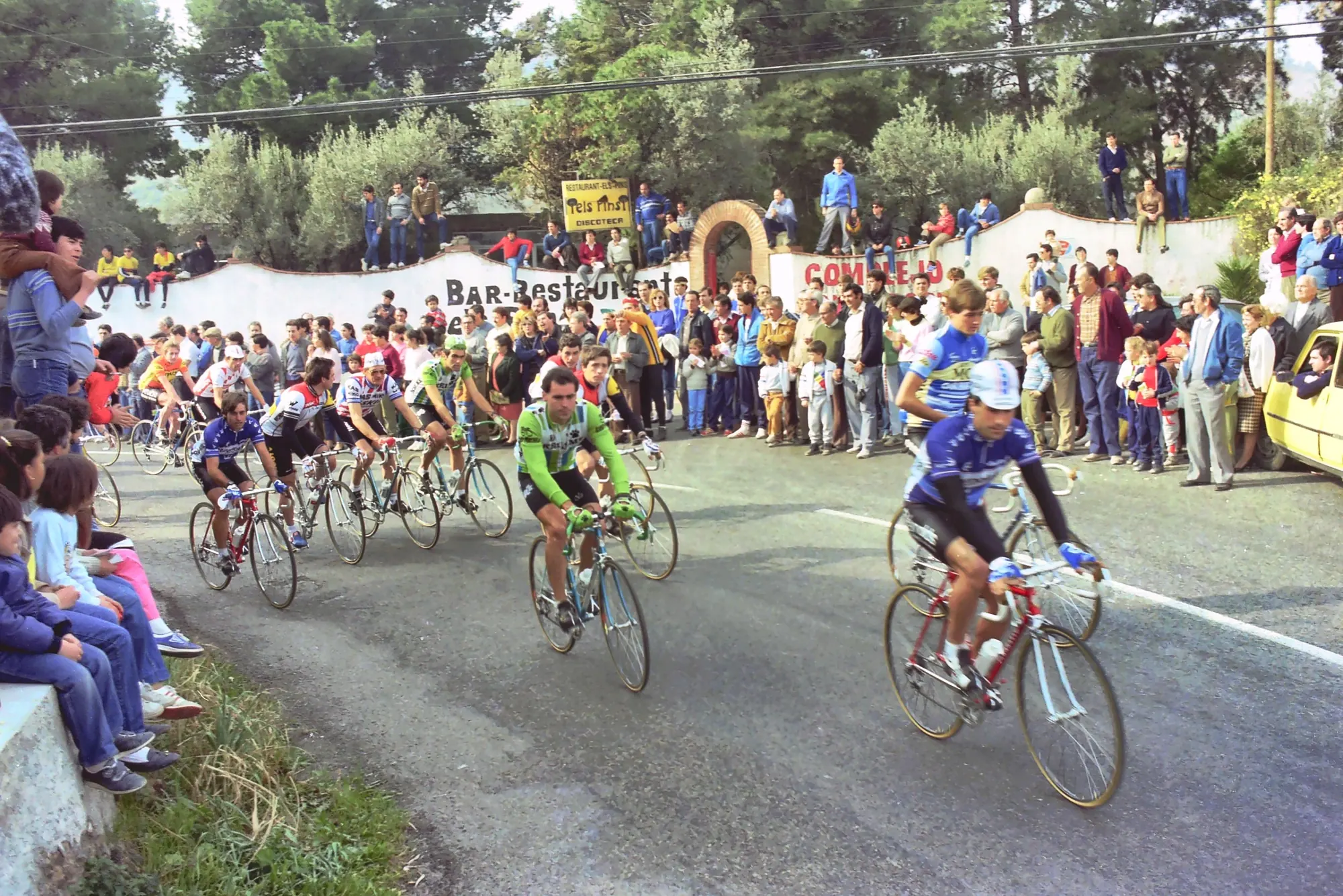
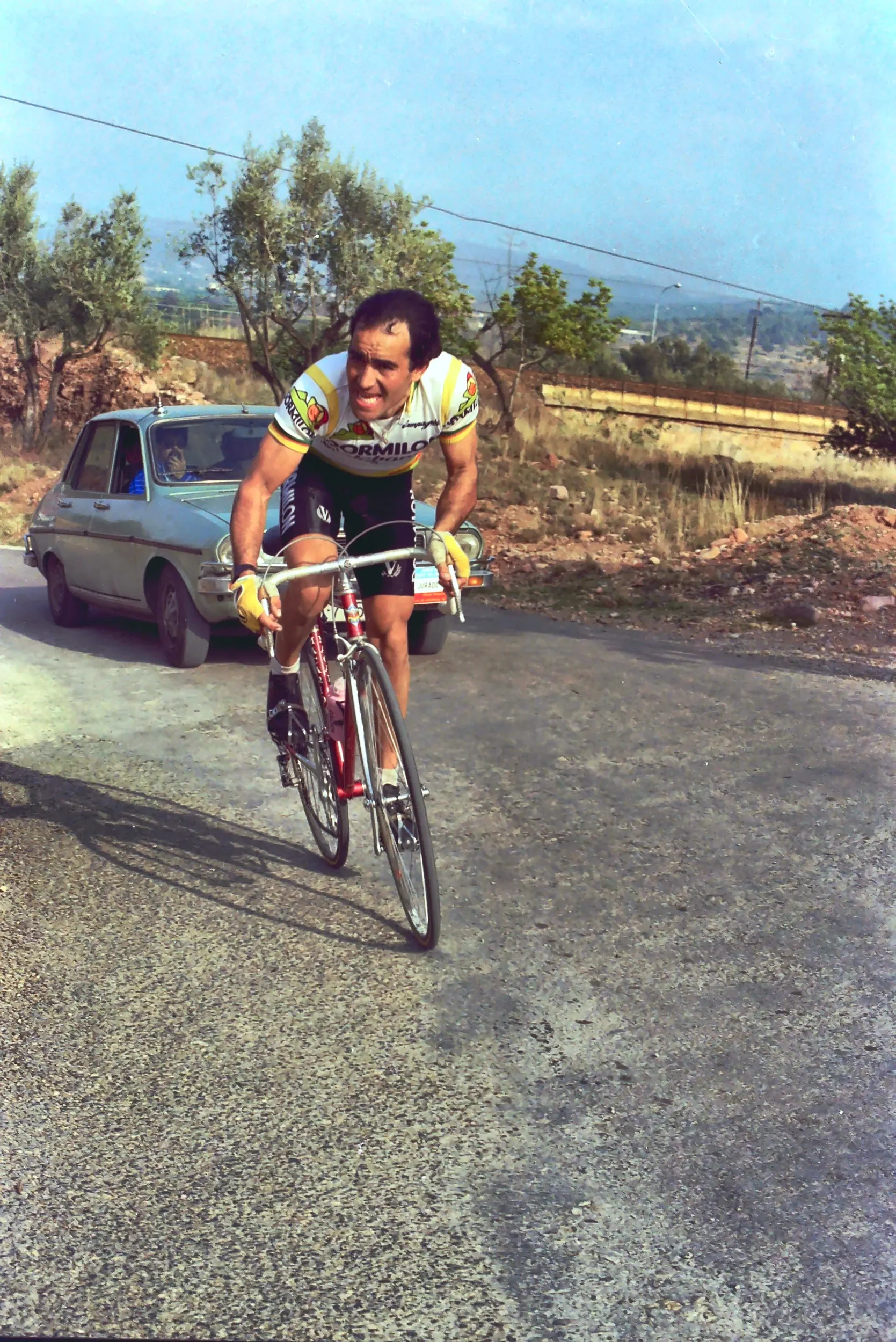
After the first pass through Los Valles (km 48), Guzmán set off alone, completing 100 km in the breakaway. His maximum lead of six minutes was enough to take him over the first pass of the Alto del Garbí.
Here, on the first slopes, something happened that today is totally unthinkable. I told you at the start that the Garbí was on everybody’s lips, well, almost everybody’s. When the ramps reached double digits, the Hitachi riders of Claude Criquielion put a foot down almost as one. The reason: the 42x21 gearing on their Splendors and the little attention they paid to the organisers’ warnings that you could not climb it “with that”.
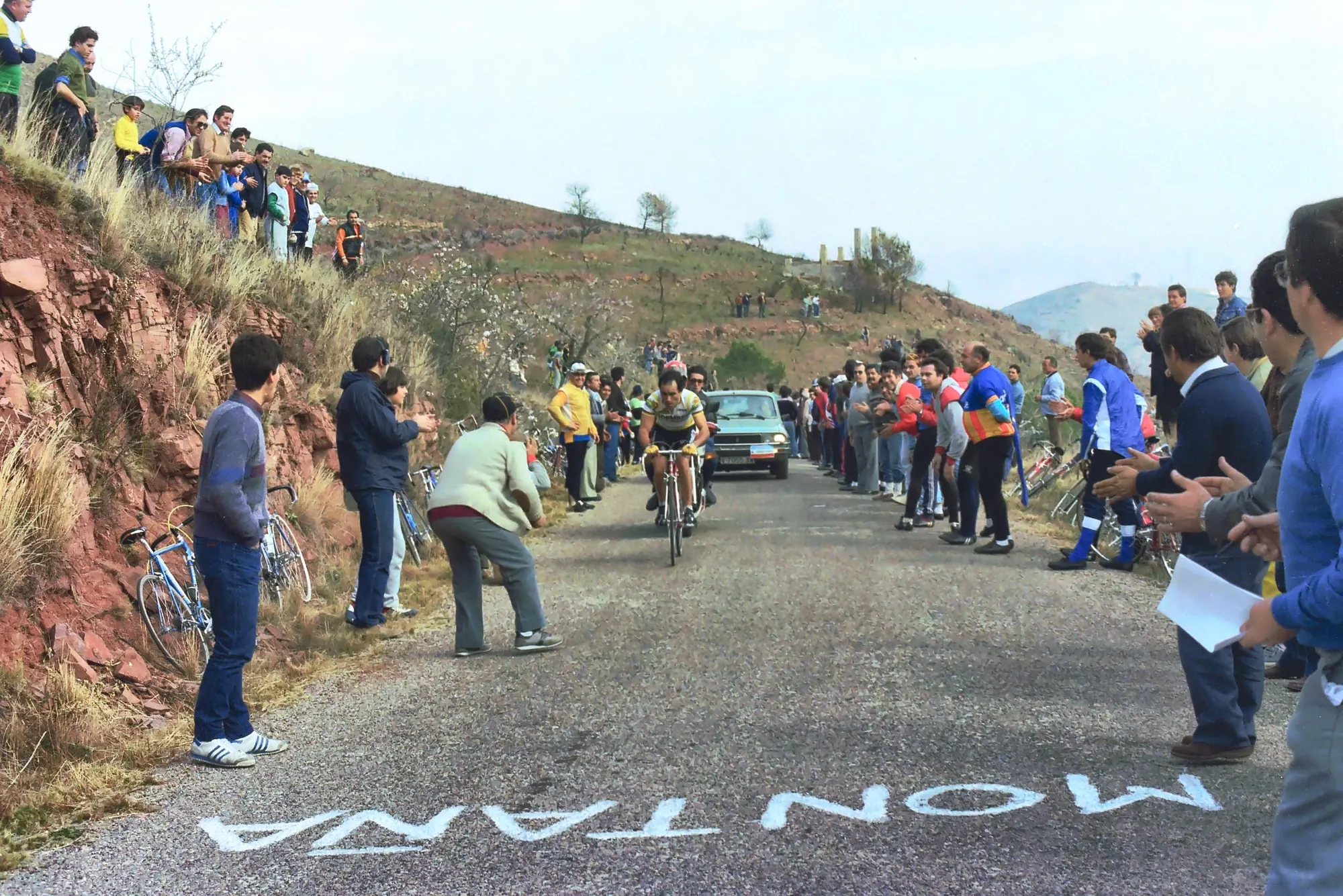
Behind Jesús Guzmán, Mariano Sánchez (Kelme) leads the first units of a scattered peloton on this first ascent. In the middle of the chase we reach the second of the climbs. With Mariano Sánchez already spent, it is Ángel Ocaña (Teka) who tries, without success. Jesús Guzmán weaves from side to side and the fans literally push him up the hill, since at times it looks as if he is going to stop and fall off his bike. The organisation’s motorbike goes along sounding its horn so that the fans stop helping and the pillion passenger even hands out blows, newspaper in hand.
Behind, the race is being decided and, as in previous editions, it is Vicente Belda (Kelme) who launches the decisive attack.
On the steepest part, the man from Alfafara puts all the favourites in check and quickly reaches the head of the race. He crests alone and plunges downhill to attempt the feat of reaching Puerto de Sagunto with 36 km still to go. Belda takes the bends with little regard for his life; behind him a chasing group of about twenty forms, with the Teka riders in charge. Blanco Villar, Echave, Díaz Zabala and Ocaña are joined by Celestino Prieto (Reynolds), Vicente Ridaura (Seat-Orbea), Bernard Hinault himself (La Vie Claire), and a Kelme rider from Massamagrell called Javier Castellar. They begin to see the small rider from Alicante, but Belda is unleashed, devouring one kilometre after another. So much so that with 5 km to go nobody can yet tell whether he will succeed at the finish. But by this stage any rise feels like the Aubisque and, 3 km from the line, right on the bridge over the River Palancia in Sagunto, he is caught by a small peloton preparing the inevitable sprint.
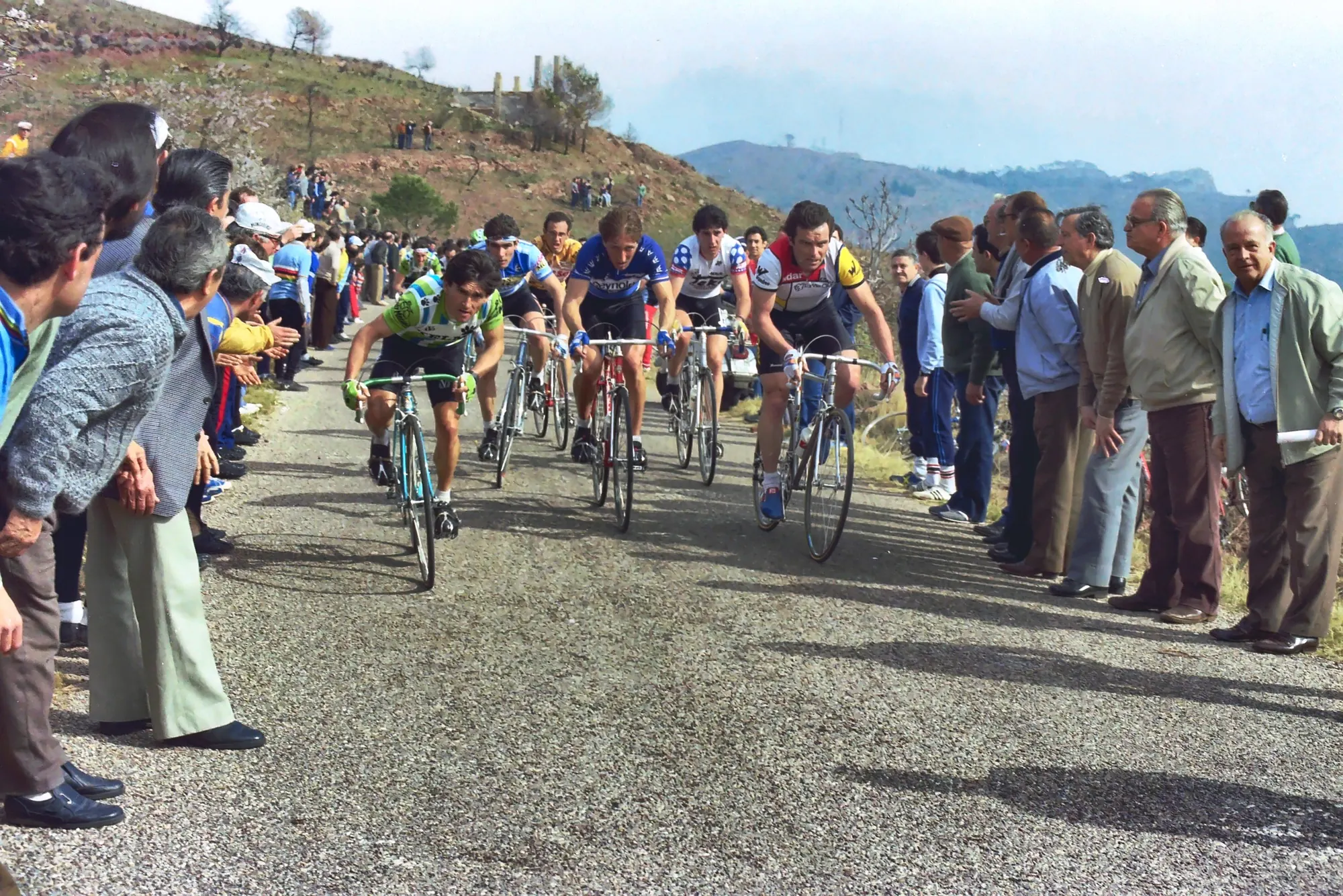
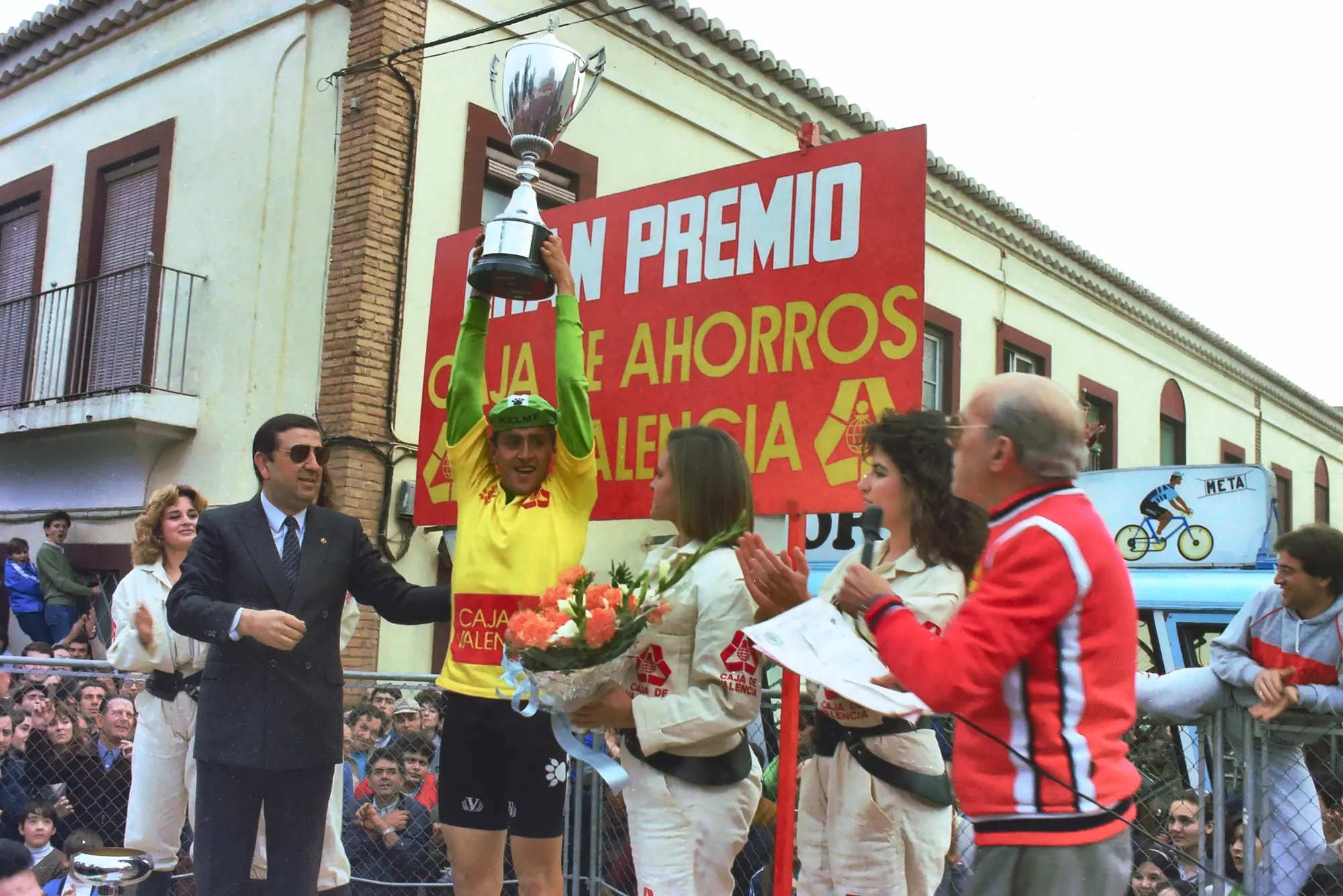
The rest is history for one of the members of this group in Puerto de Sagunto. A sprint set on a wide bend that did not let the finish be seen until the last 250 metres. Jerónimo Ibáñez (Seat-Orbea) launches the sprint from far out with no sight of the line, and Javier Castellar goes after him. Bernard Hinault holds his horses until he sees the banner and then changes pace. Once in front, Javier is two bike lengths clear and there is no room left for a comeback. Castellar’s arm in the air and Hinault’s tremendous slap on the handlebars of the Look, which would have hurt even Bernard Tapie himself.
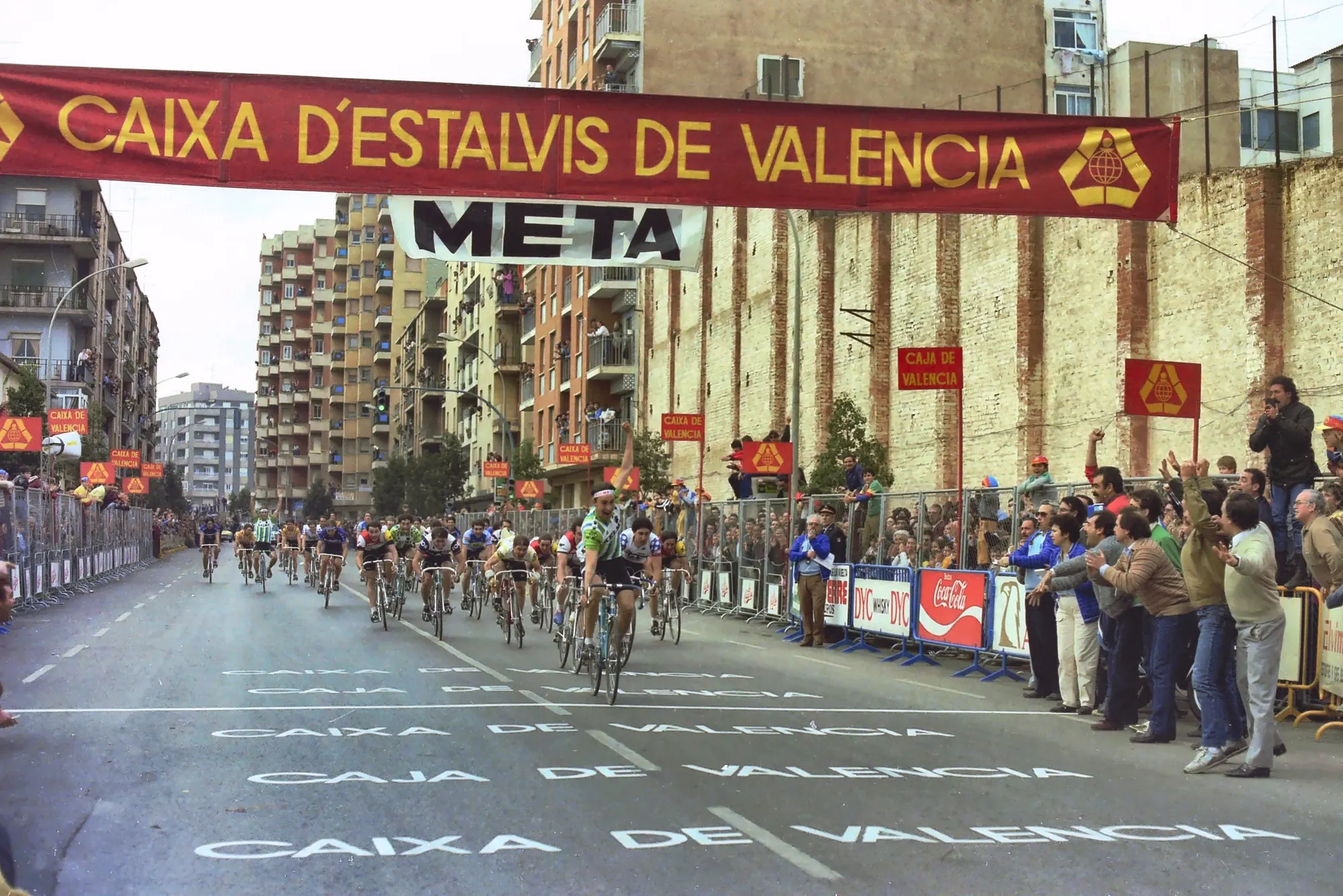
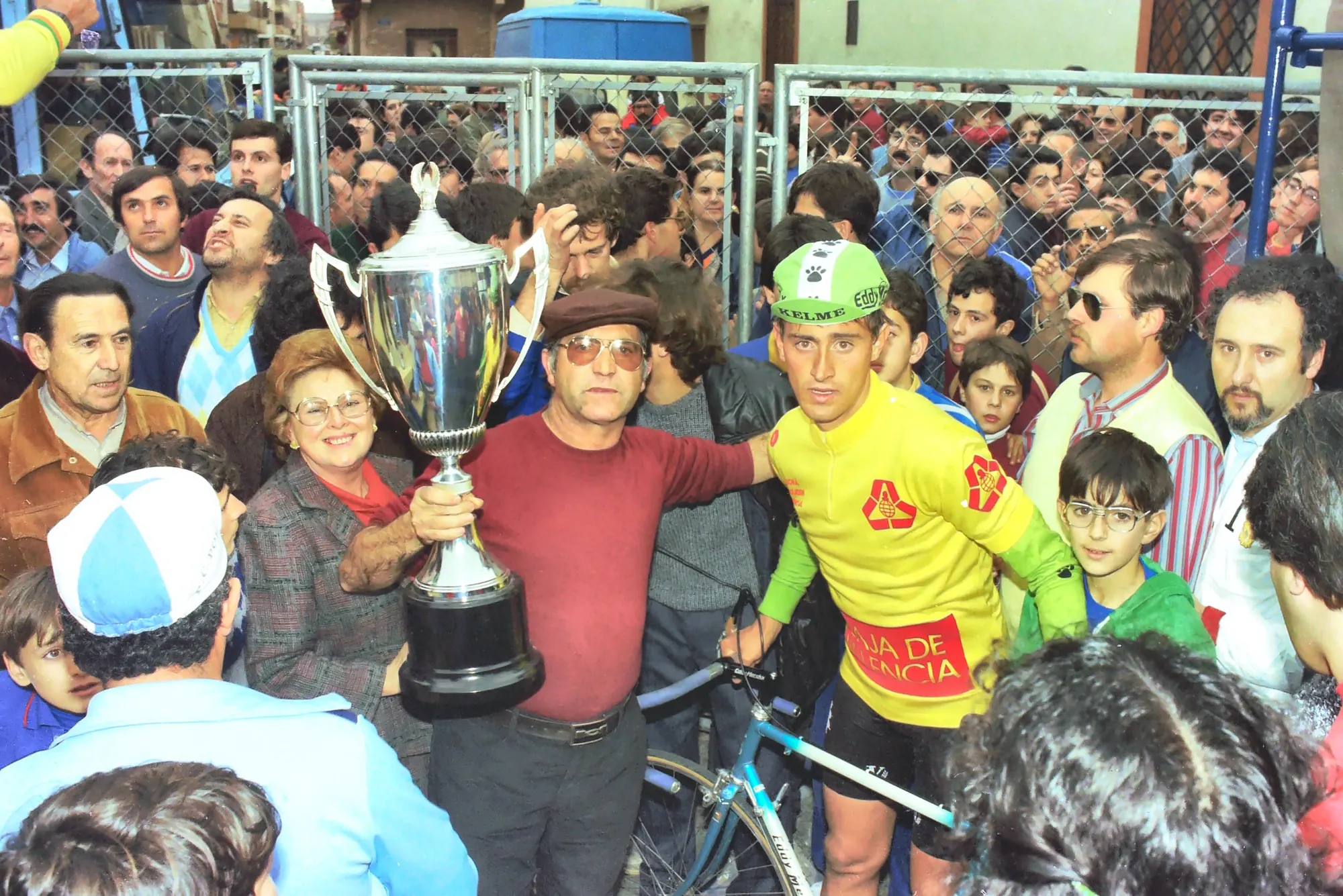
You do not beat a man like Hinault every day. Javier Castellar achieves the most high-profile win of his career and possibly of the Clàssica Camp de Morvedre itself. Joy overflows on his face and on those of all the fans who felt in their own skins that David against Goliath moment. Belda was annoyed at how strict the officials had been with the Kelme car during the chase. At the same time, he showed his delight at his team-mate’s victory, leaving a line for history about the Hitachi affair. “If the Garbí seems too hard to them, they should not come”.
These were all the results:
Javier Castellar 1st, Bernard Hinault 2nd, Federico Echave 3rd, Camilo Santos 4th, Cornillet 5th, Cavallo 6th, Rüttimann 7th, Leleu 8th, Alfonsel 9th and Ibáñez 10th.
The podium.
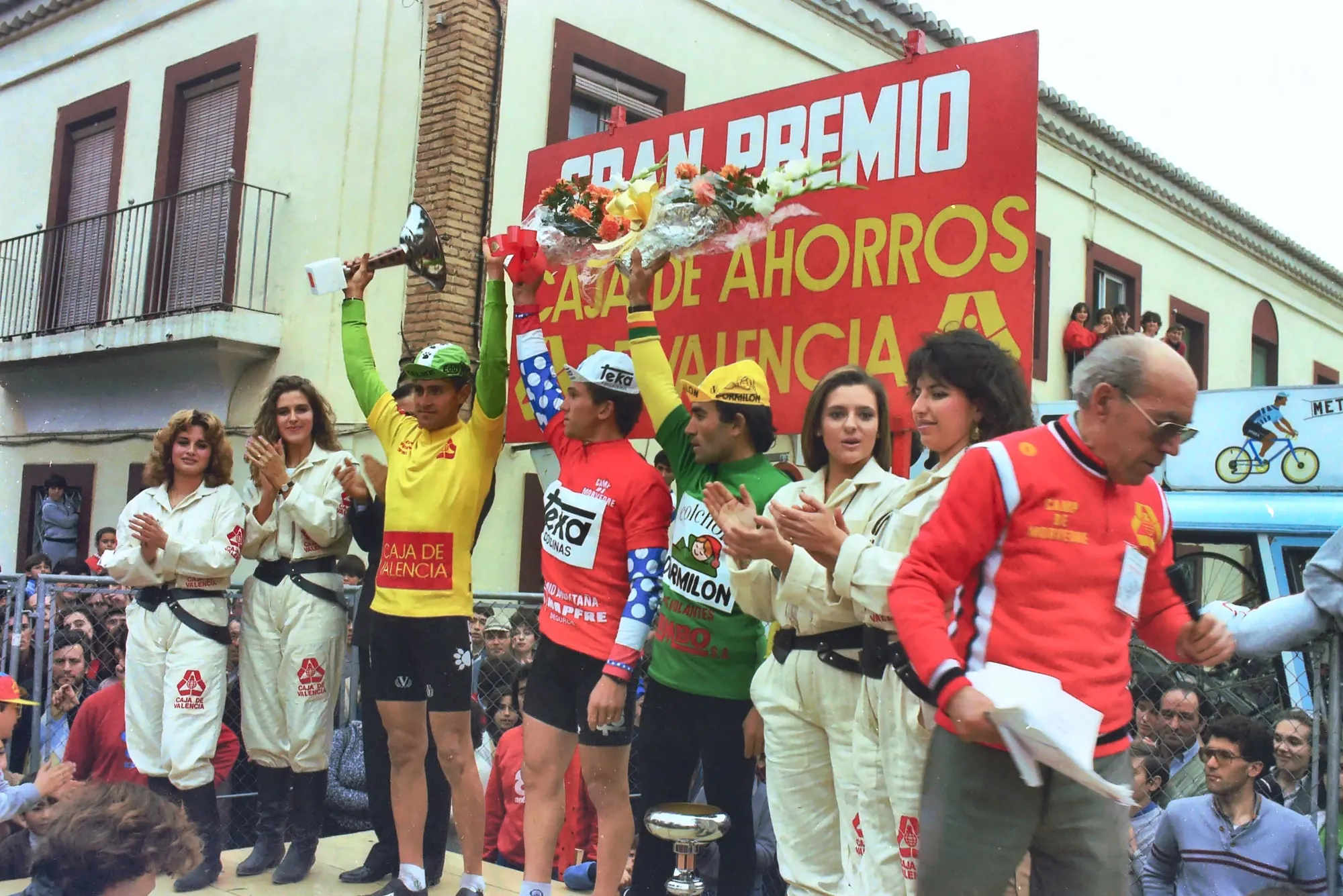
Gran Premio de la Montaña to Jesús Blanco Villar, intermediate and Special Sprints to Jesús Guzmán and best team Kelme.
Results.
- WinnerJ. CastellarKelme
- Average38.3 km/h
- Finishers87Riders classified
| # | Rider | Team | Time |
|---|---|---|---|
| 1 | Javier CastellarKelme | Kelme | 5:00:21 |
| 2 | Bernard HinaultLa Vie Claire | La Vie Claire | s.t. |
| 3 | Federico EchaveTeka | Teka | s.t. |
| 4 | Camilo SantosDormilón Colchones | Dormilón Colchones | s.t. |
| 5 | Bruno CornilletLa Vie Claire | La Vie Claire | s.t. |
| 6 | Domenico CavalloZor-Gemeaz | Zor-Gemeaz | s.t. |
| 7 | Niki RüttimannLa Vie Claire | La Vie Claire | s.t. |
| 8 | Philippe LeleuLa Vie Claire | La Vie Claire | s.t. |
| 9 | Bernardo AlfonselKelme | Kelme | s.t. |
| 10 | Jerónimo IbáñezSeat-Orbea | Seat-Orbea | s.t. |
Photo gallery.
Photos: Antonio Ogalla