V Volta al Camp de Morvedre.
HistoryThe Good, the Bad and the Ugly.
Report by Jose Lorente Garcerá.
- Date15 Feb 1986Saturday, start at 10:00
- Distance182 kmEstivella – Alto del Garbí
- Starters151Riders
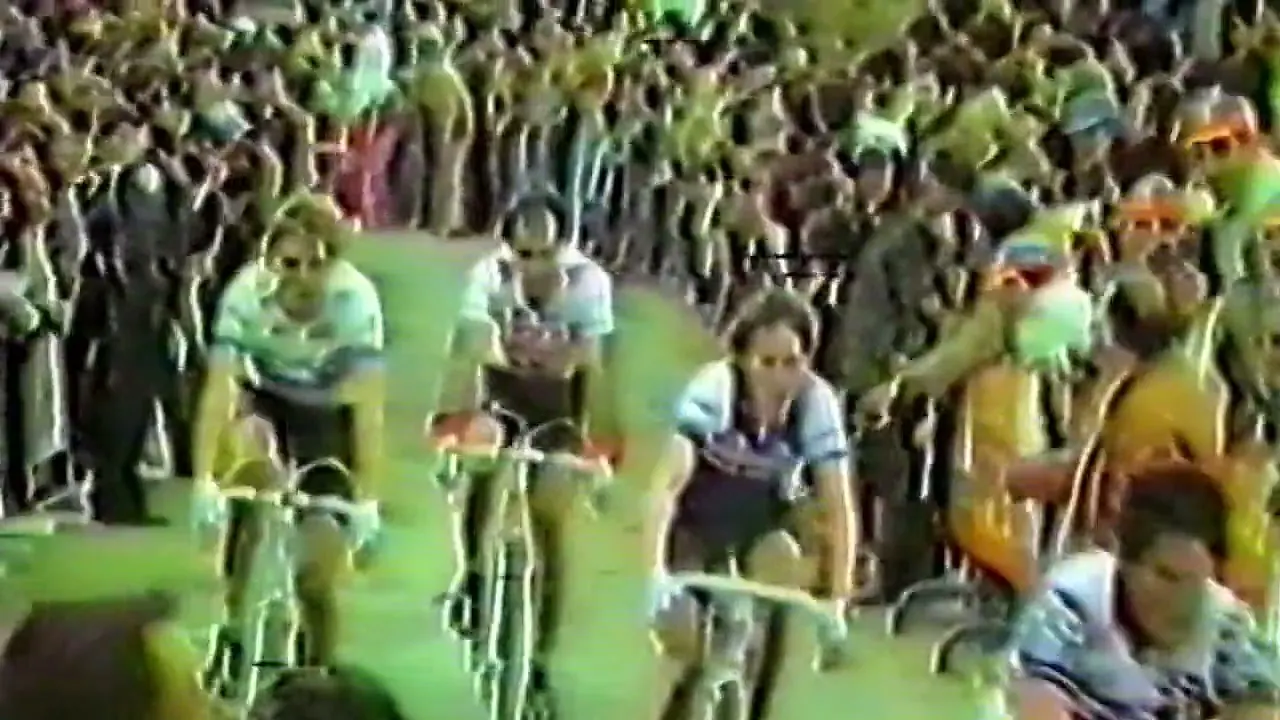 Play “The V Volta al Camp de Morvedre, on film”
Really, the title of our own report on the V Volta al Camp de Morvedre should have been “First Hilse, second Mir and then me”, but to give it a more cinematic touch I have taken the easy way out, as I will explain later.
As ever, a week of frenzy in the Valencian Community, with a series of races that included our own Clàssica Camp de Morvedre; let us set the scene. On Tuesday the 11th, in the 1st Gran Premio Ciudad de Albacete, Gutiérrez Alfonso (Teka) won the sprint ahead of illustrious names such as Kelly (Kas) and Elliott (ANC-Halfords). The same thing happened in the G.P. de Alicante, where the Panasonic riders worked for their sprinter Eddy Planckaert, who repeated his win in the Trofeu Internacional Vila de Quart: quite a week for the Belgian. Memorial Dalmacio Langarika in Alzira: a cruel ending for Blanco Villar (Teka), caught 200 metres from the line, after 85 km in the breakaway, by the Dane Jorg Pedersen (Carrera).
Then, our Clàssica Camp de Morvedre on the Saturday and, on the Sunday, Bernard Hinault’s walkover in the Luis Puig, winning after 150 km of a solo breakaway, though, to be fair, he was rested. On to ours.
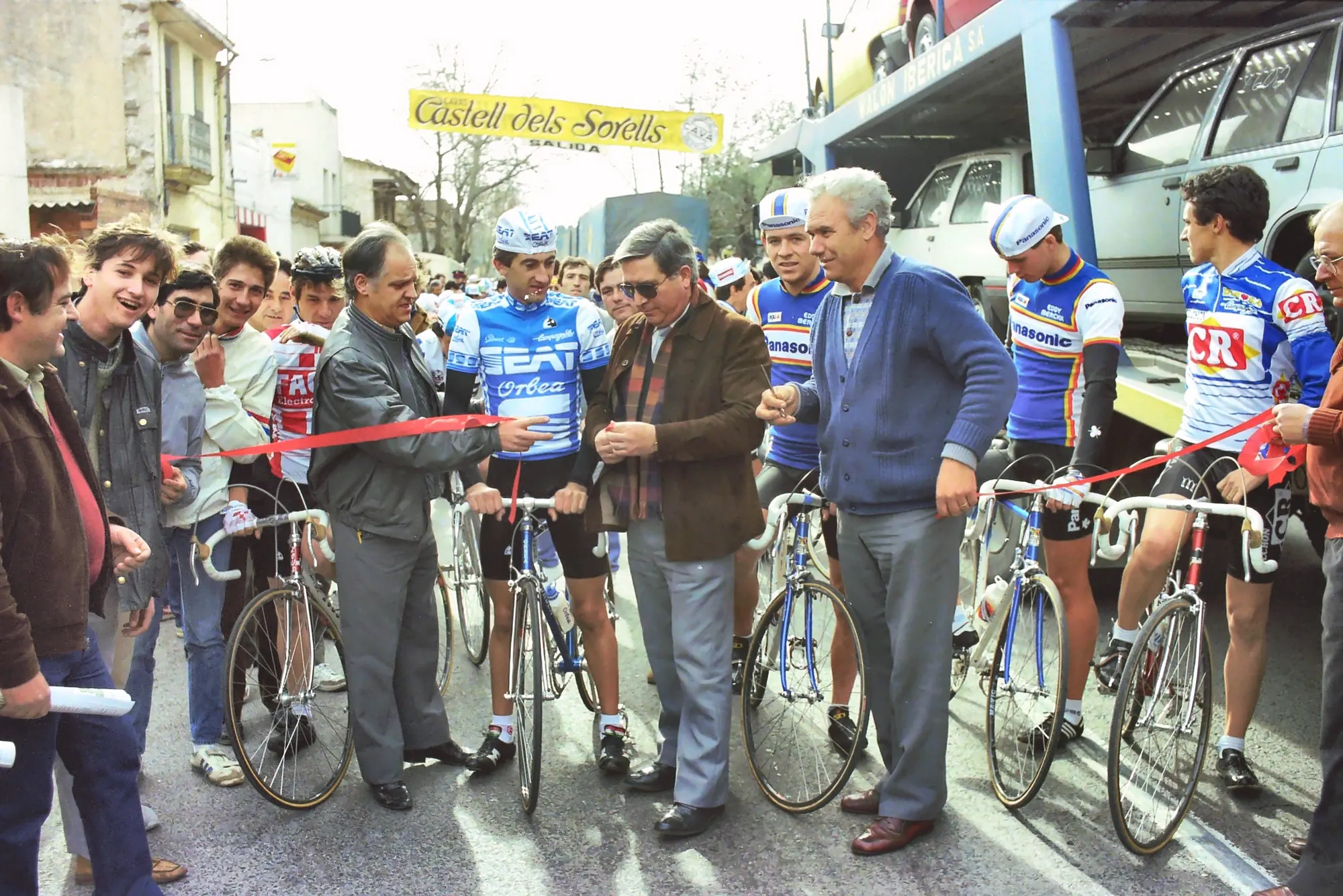
The route.
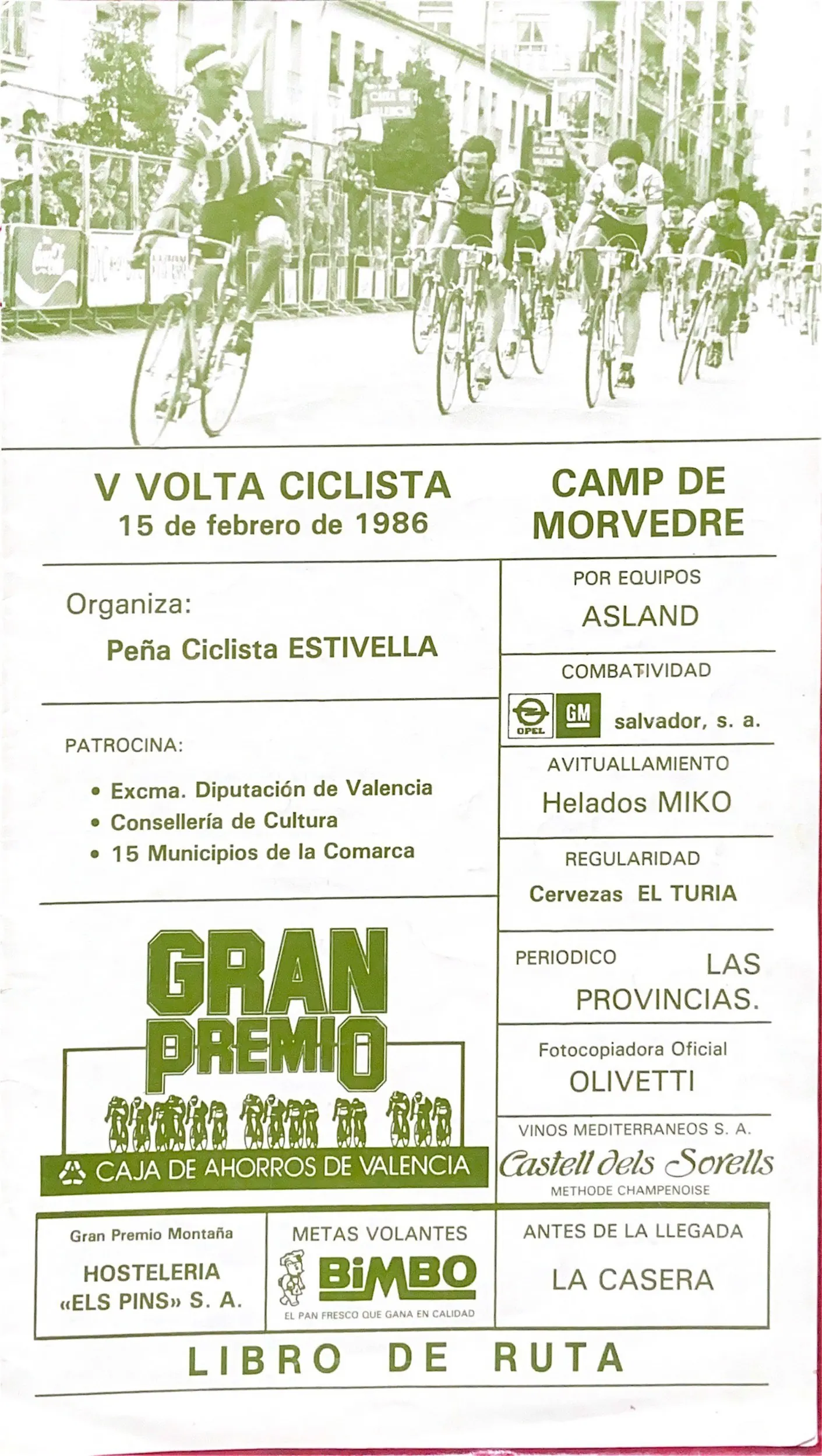
A very similar route, I would say almost identical to that of the 1985 edition, with the novelty of the finish at the second passage over the Alto del Garbí. Before that, the two typical laps from Els Pins in Estivella towards Algar via Torres Torres, Algímia d’Alfara and Alfara de la Baronía and, after passing the finish line, a descent to Sagunto and Los Valles and a return to Estivella via Petrés and Albalat dels Tarongers, completing the first lap. The second was the same but, instead of going through the finish, after crossing the bridge over the River Palancia at Albalat dels Tarongers the route continued straight on to tackle the first climb of the Garbí via Segart and, after its descent via the Oronet, back to Estivella via Torres Torres and the final climb of the Garbí, with the finish at its summit.
Special Sprints in Estivella (km 23 and 95) and Sagunto (km 33 and 105), an intermediate sprint in Quartell (km 49 and 121) and the two passes of the Gran Premio de la Montaña over the Garbí (km 150 and 180), the last only 2 km from the finish.
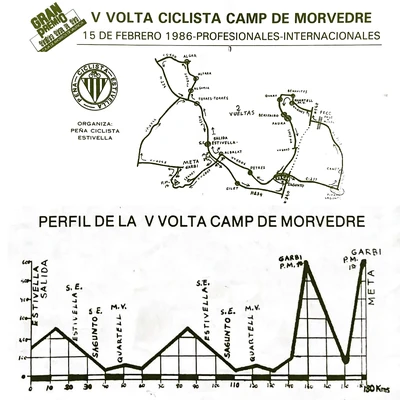
The teams.
A big turnout, with all the Spanish squads (Zor, Kelme, Reynolds, Seat-Orbea, Zahor, Teka, Colchón CR and Dormilón), plus as many foreign ones (Carrera, La Vie Claire, PDM, Kas, Fagor, Panasonic). Lemond, Hinault, Visentini, Millar, Knetemann, Caritoux, Chiappucci, Zimmermann, Rooks, Chizabas and the fighters of the Spanish scene of the day: Delgado, Lejarreta, Arenas, Muñoz, Castellar, Chozas, Pino, and so on.
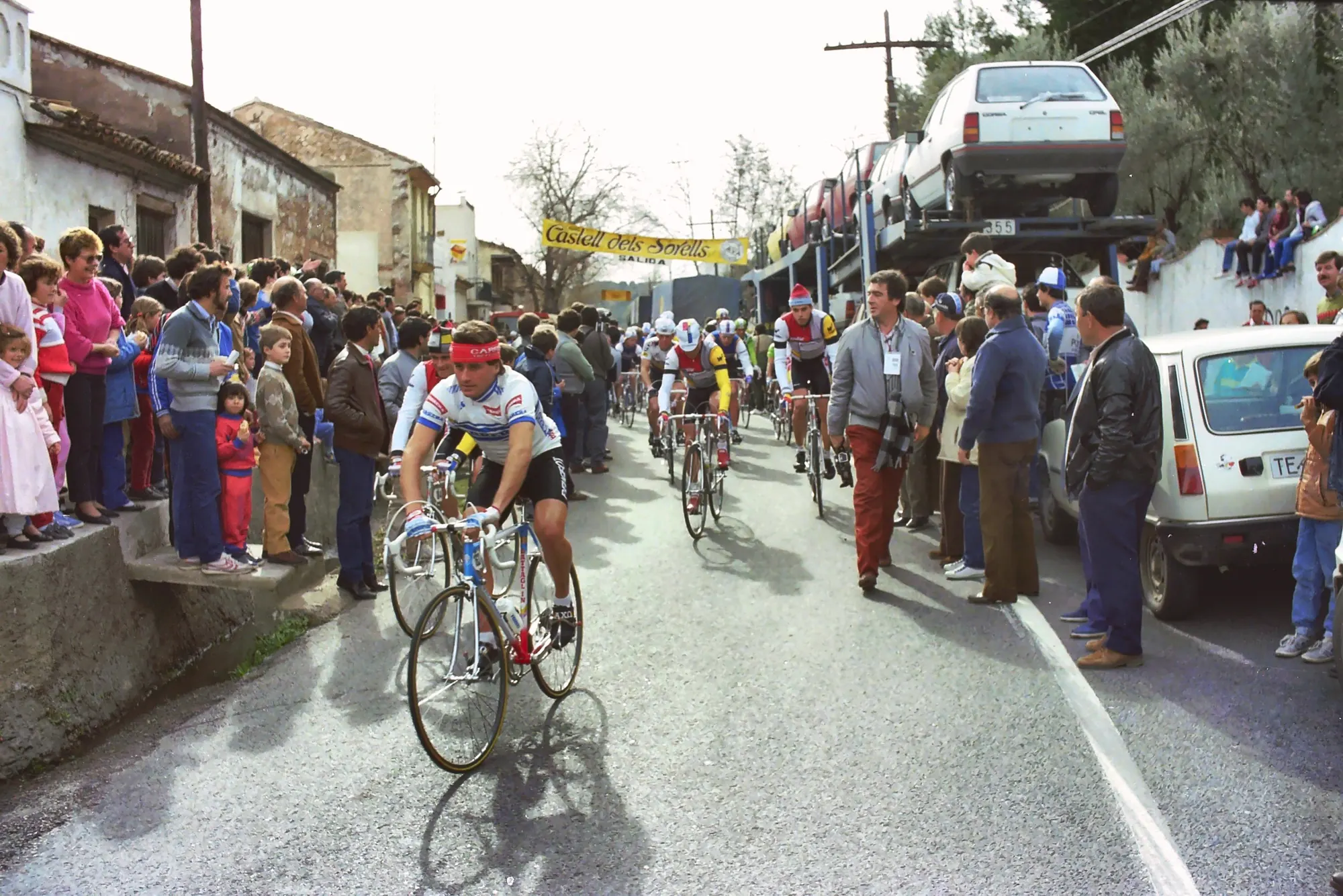
When it came to it, only 42 of them reached the finish, and many of the stars either abandoned before the first pass over the Garbí or did so before the second, like Hinault, who came out for the photo and saved himself for the Luis Puig the following day, or Visentini himself, who paraded his sky-blue Battaglin, number 163, around Els Pins and its surroundings without ruffling his famous mane of hair.
The race.
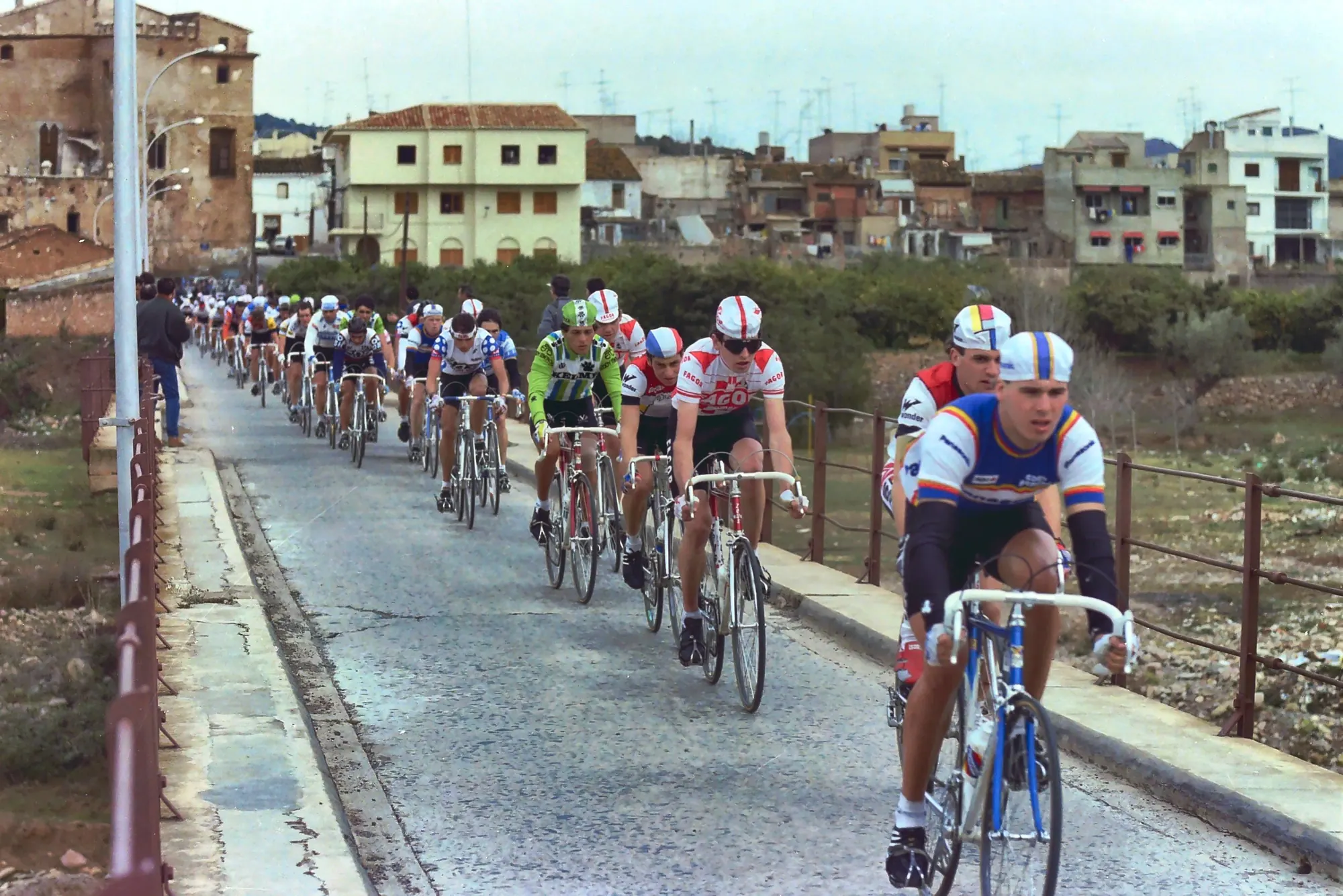
As usually happens in races with a summit finish, there were few tactical variations beyond the sprints for the intermediate prizes, which Antxon Lekuona (Seat-Orbea) took in Sagunto and Quartell.
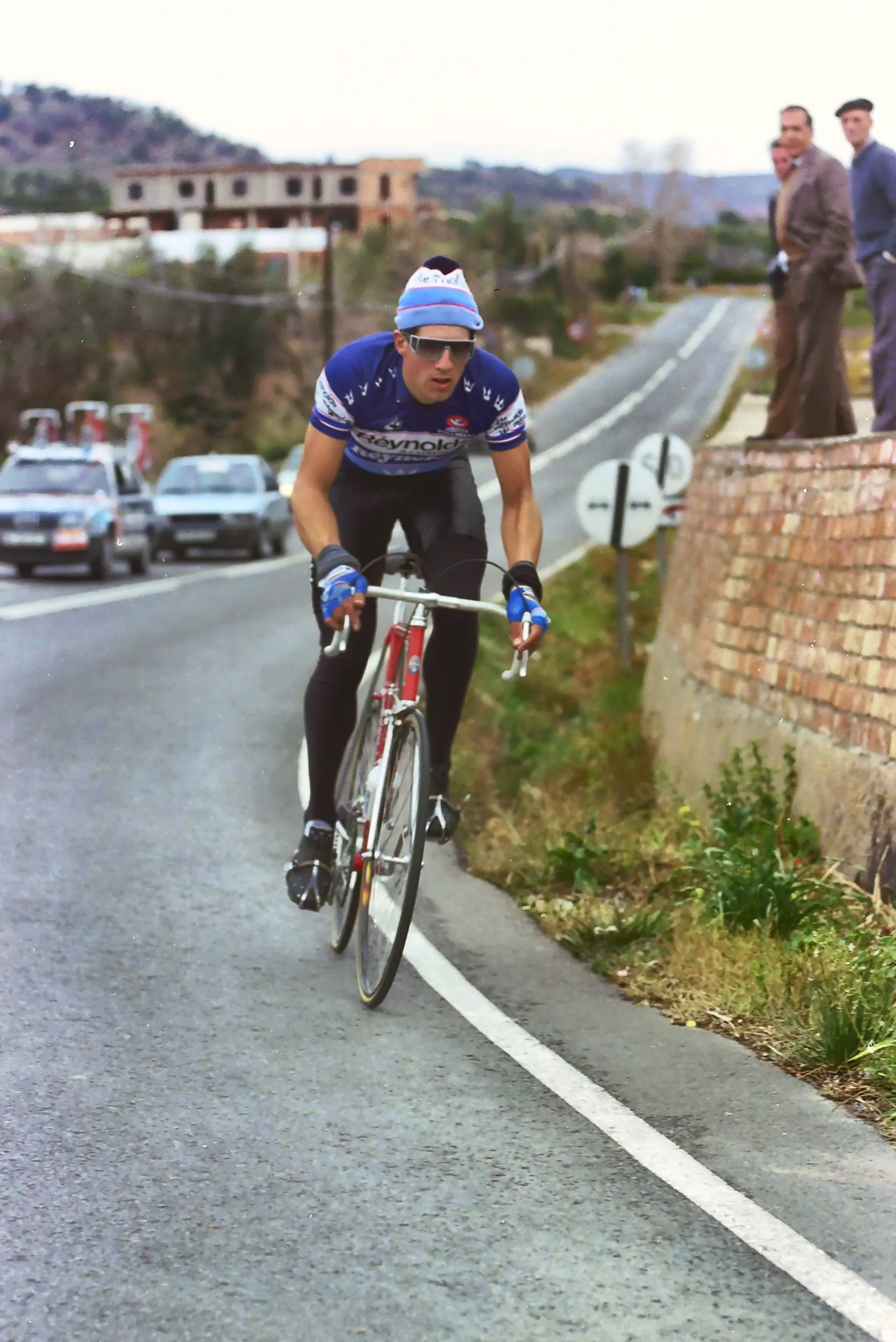
At km 54, as the peloton passed through Benifairó de les Valls, the day’s breakaway was born. A big lad from Reynolds, who had already spent two seasons showing his worth, above all in prologues and time trials, and who was already on many people’s lips, jumped from the group at great speed, showing off his rouleur’s qualities: his name, Miguel Induráin. In a most curious get-up, a three-coloured woolly hat not sitting too snugly, long leg warmers and arm warmers hanging down at his wrists, Induráin roamed the Camp de Morvedre for 65 km, reaching the first ramps of the Garbí, where his adventure ended.
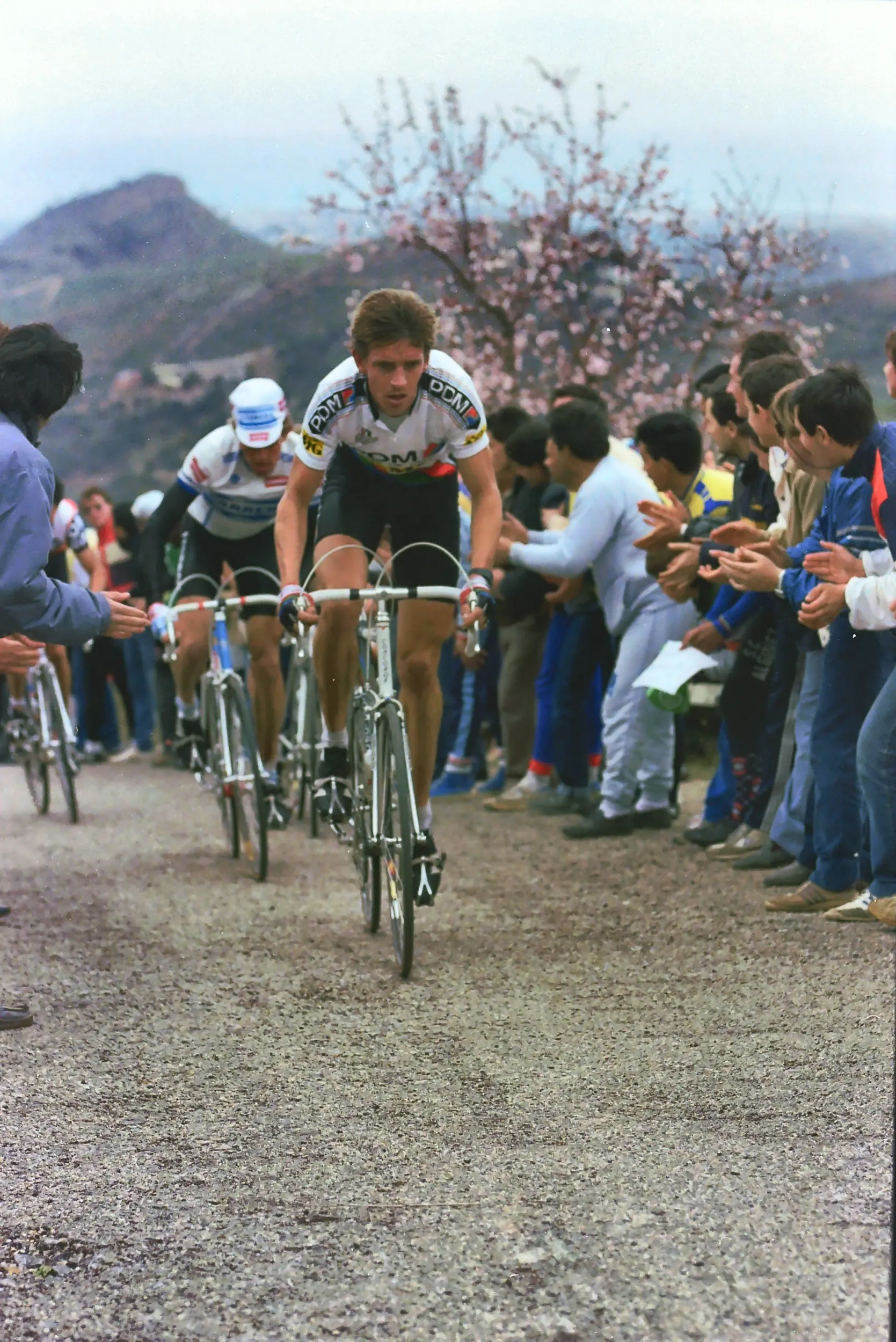
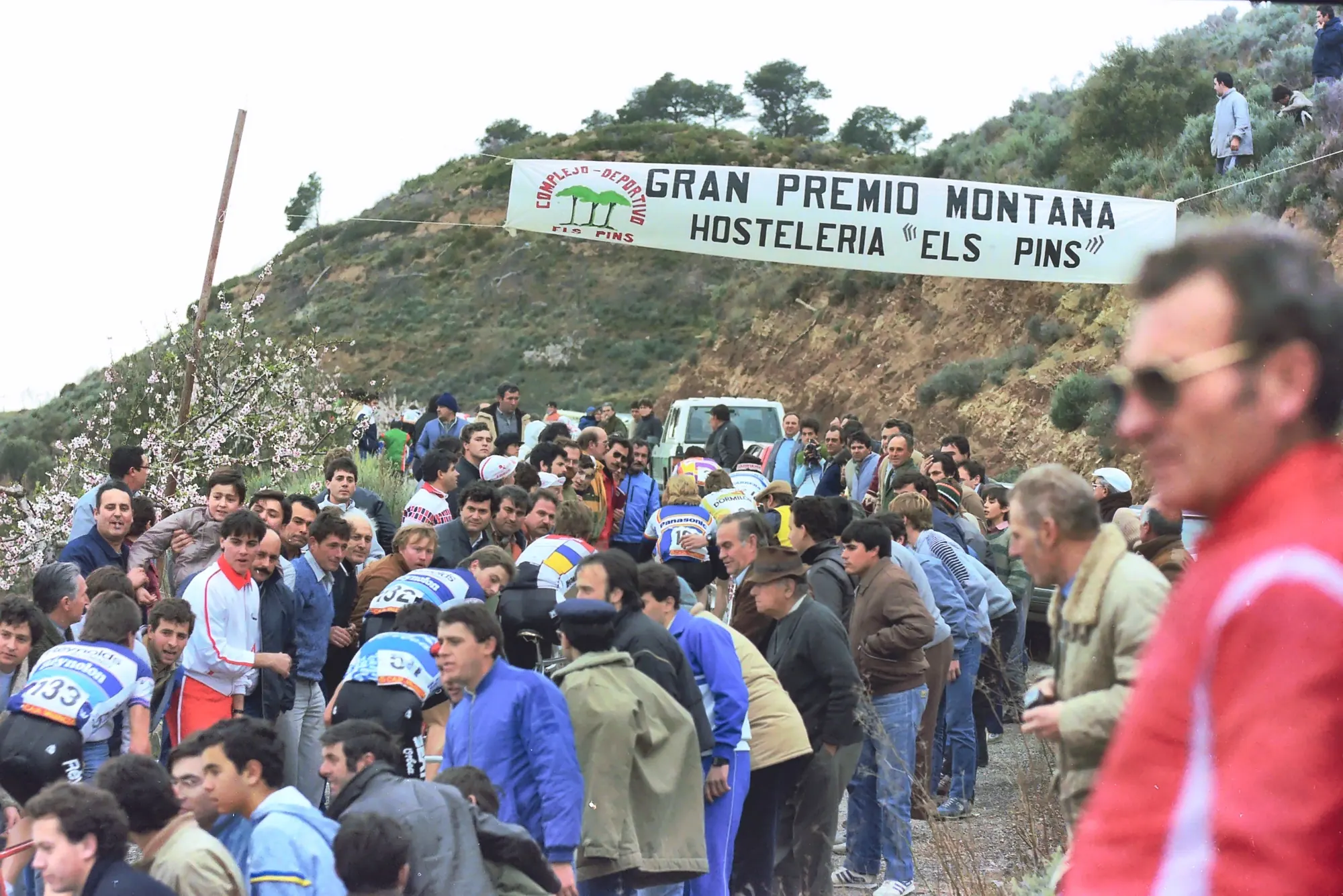
It was a climb ridden as a block, without attacks and under the firm control of Teka, with a powerful Peter Hilse always at the front. After the three famous steep ramps, by natural selection, four riders remained at the head: the already mentioned Hilse (Teka), Zimmermann (Carrera), Rooks (PDM) and Pacho Rodríguez, from Boyacá (Zor). They thus crested with a slight advantage over a group of leading riders, among them Lemond (La Vie Claire), Millar (Panasonic) and Pedro Delgado (PDM), who attacked on the kilometre and a half between the Gran Premio de la Montaña line and the finish itself.
Pedro Muñoz (Fagor) and Javier Castellar (Kelme) snuffed out the attempt by the man from Segovia and, after the regrouping on the descent, we reached the final climb with a group of some thirty riders.
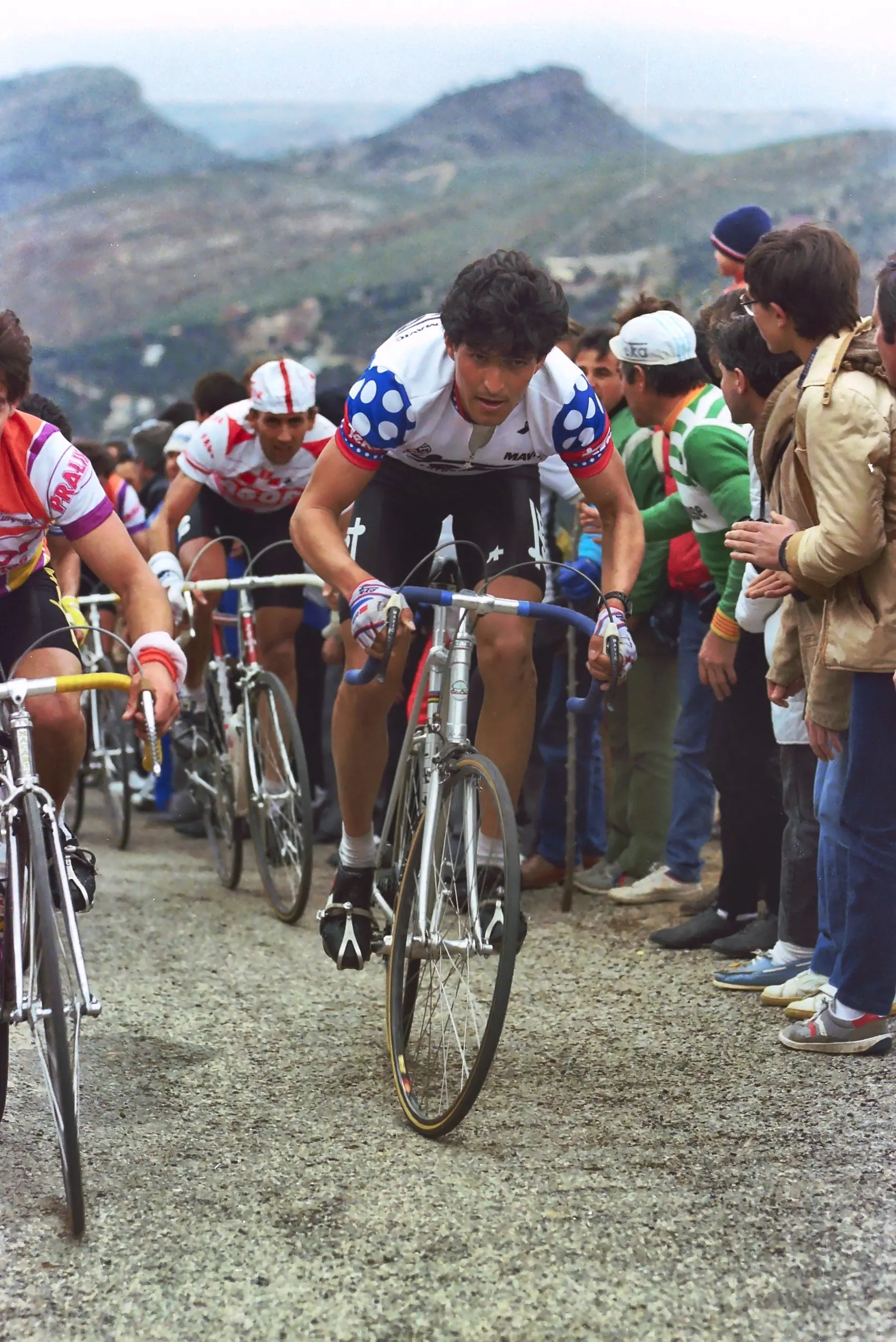
Zor enters at speed, making the climb as hard as possible, but it is Fagor who opens hostilities. The hard ramps put everyone in their place and we are back to the quartet from the first climb. Hilse, Rooks, Zimmermann and Pacho Rodríguez seem destined to fight it out for the Clàssica.
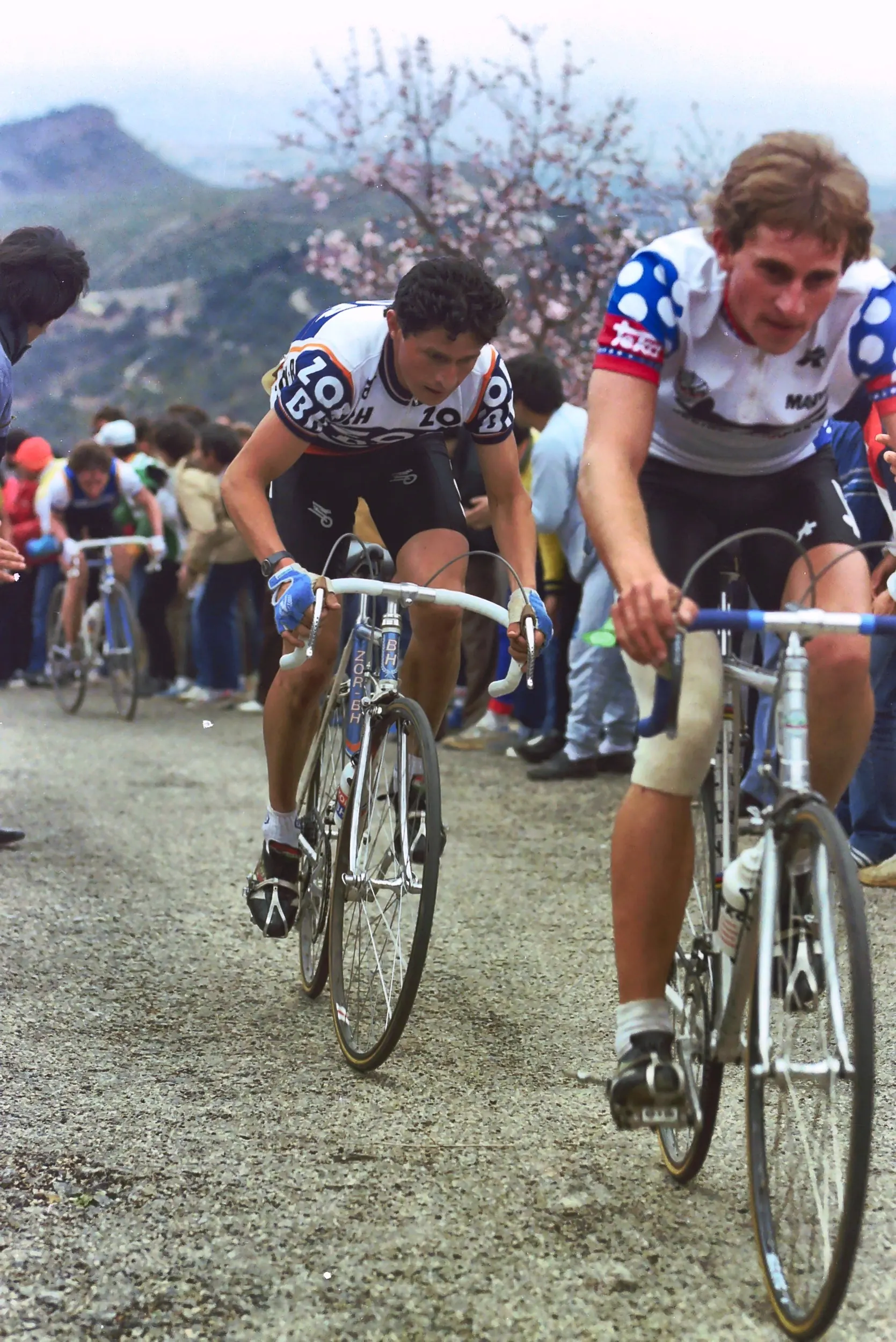
Hilse gains a few metres on the last steep pitch before the Gran Premio de la Montaña, Pacho seems to suffer and Rooks is the one tasked with closing the gap, with Zimmermann on his wheel. After cresting, they begin to watch each other and are caught by a small group made up of Chizabas (Kelme), Delgado (PDM), Muñoz (Fagor), Caritoux (Fagor), Millar (Panasonic), Arenas (Teka) and Schepers (Carrera).
In the final kilometre, the Frenchman Éric Caritoux raises the pace but is unable to get away, and it is then that Pedro Delgado, who had been at the back of this little group, launches the decisive attack, which only the German Peter Hilse follows. Teka beat PDM in the last fifty metres, taking victory in the V Volta al Camp de Morvedre.
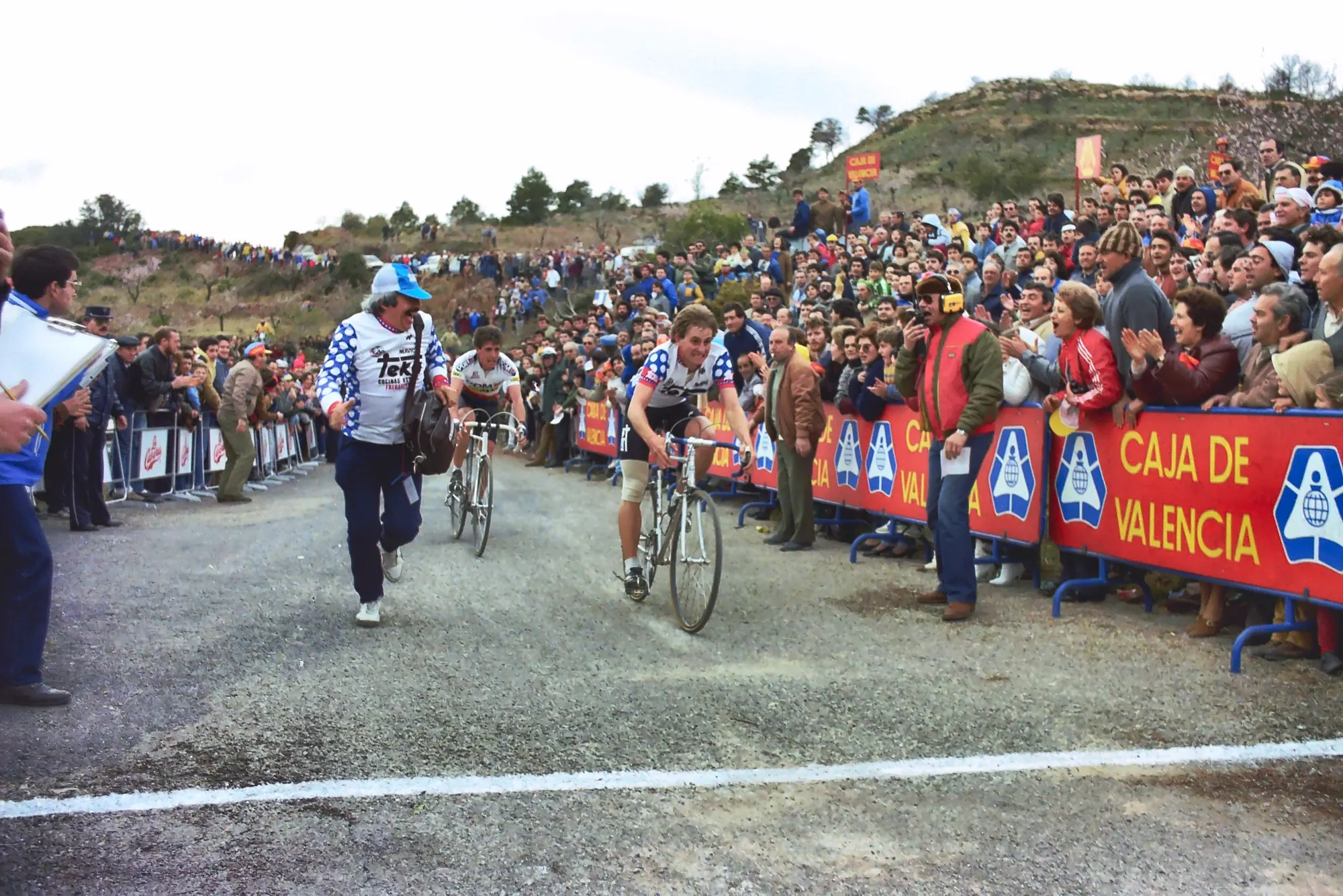
Before we get to the purely statistical summary, do you remember “The Good, the Bad and the Ugly”?
In the middle of the sprint, just as Peter Hilse crossed the finish line, Jaime Mir appeared, running, with his moustache and his Teka jersey, with such vigour that he overtook Perico himself to embrace Peter Hilse. Pedro always maintained that he had not been second that day; in his own words, “first was Hilse, second Mir and then me”. Jaime Mir’s presence in the Almería spaghetti westerns of the era is well known, so the podium of the V Volta al Camp de Morvedre was occupied to the background music of Ennio Morricone: “The Good, the Bad and the Ugly”.
Peter Hilse 1st, Pedro Delgado 2nd, Guillermo Arenas 3rd, Steven Rooks 4th, Alirio Chizabas 5th, Éric Caritoux 6th, Eddy Schepers 7th, Pacho Rodríguez 8th, Robert Millar 9th and Urs Zimmermann 10th.
The podium.
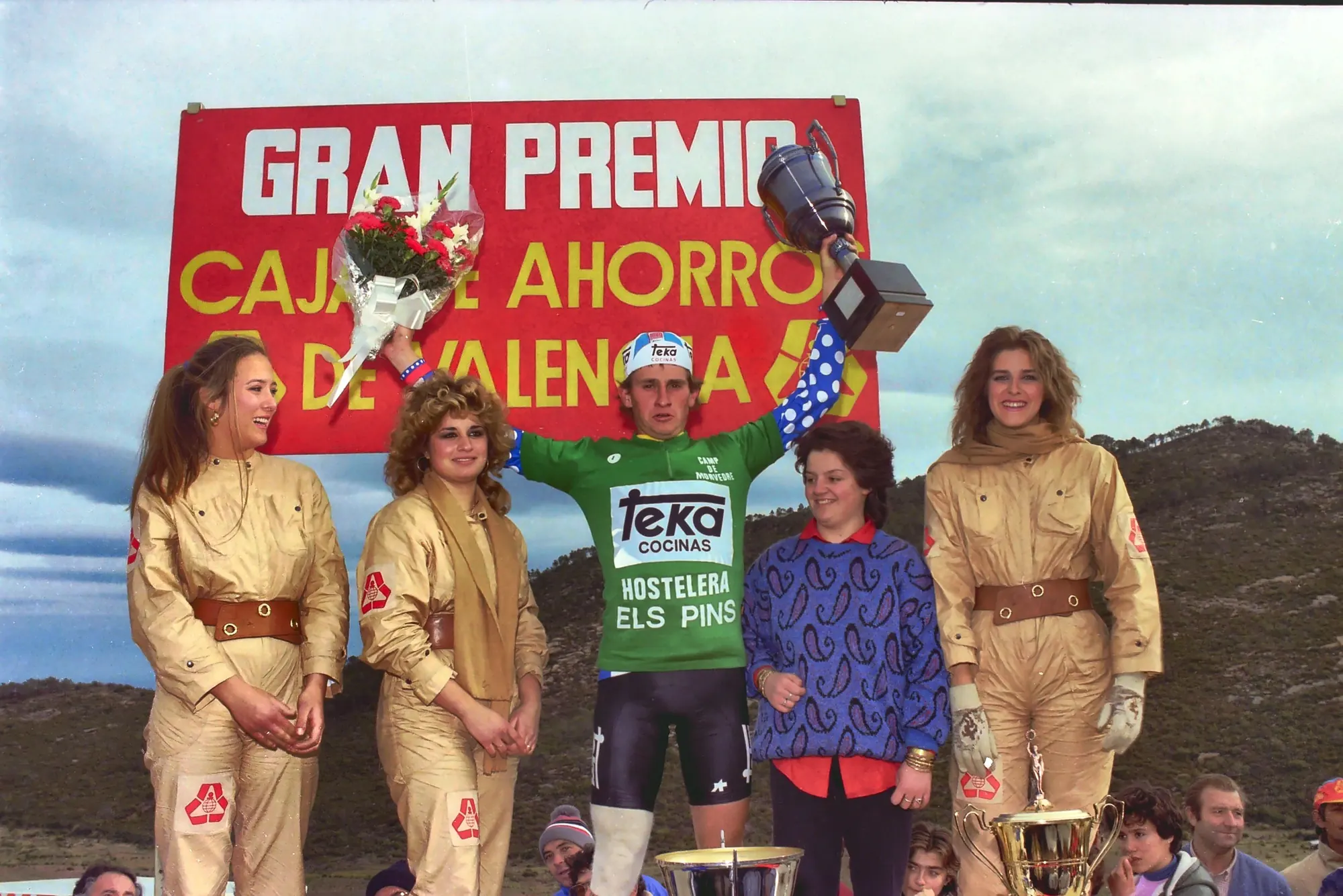
Gran Premio de la Montaña to Peter Hilse, intermediate sprints and Special Sprints to Antxon Lekuona and best team Teka.
Results.
- WinnerP. HilseTeka
- Average37.8 km/h
- Finishers42Riders classified
| # | Rider | Team | Time |
|---|---|---|---|
| 1 | Peter HilseTeka | Teka | 4:48:38 |
| 2 | Pedro DelgadoPDM-Concorde | PDM-Concorde | |
| 3 | Guillermo ArenasTeka | Teka | |
| 4 | Steven RooksPDM-Concorde | PDM-Concorde | |
| 5 | Alirio ChizabasKelme | Kelme | |
| 6 | Éric CaritouxFagor | Fagor | |
| 7 | Eddy SchepersCarrera Jeans-Vagabond | Carrera Jeans-Vagabond | |
| 8 | Pacho RodríguezZor-BH | Zor-BH | |
| 9 | Robert MillarPanasonic | Panasonic | |
| 10 | Urs ZimmermannCarrera Jeans-Vagabond | Carrera Jeans-Vagabond |
Photo gallery.
Photos: Antonio Ogalla